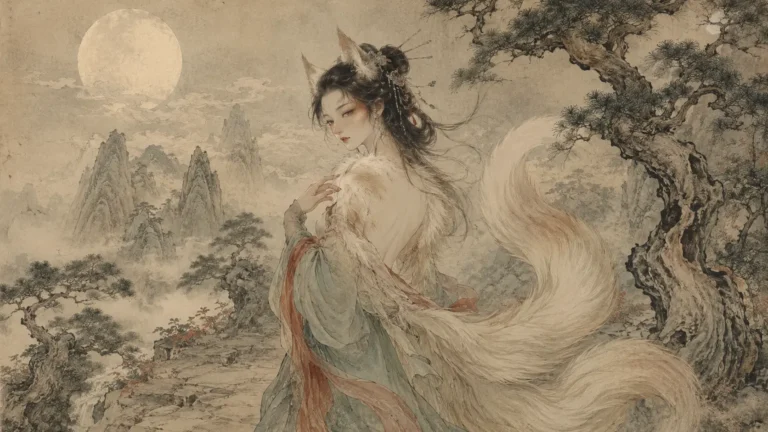
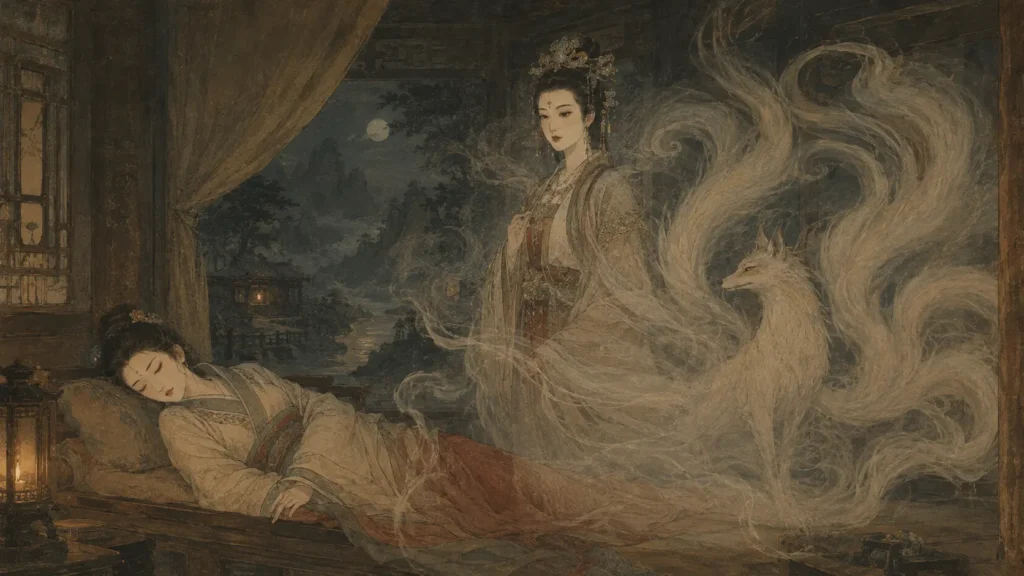
Before she became one of the most feared fox spirits in Chinese mythology, Daji was remembered as a woman.
She did not originally have nine tails.
She was not born as a demon.
But centuries of history, political storytelling, folklore, and fiction transformed her name into the beautiful face of a supernatural creature blamed for helping destroy a dynasty.
Daji (妲己, Dájǐ) was traditionally remembered as a consort of Di Xin, better known as King Zhou, the final ruler of the Shang dynasty. In the later novel Fengshen Yanyi, however, the human Su Daji is replaced by a thousand-year-old fox spirit that enters the royal court using her body and identity.
That difference is the key to understanding her story.
Who Was Daji?
In traditional Chinese historical writing, Daji appears as the favoured consort of the final Shang king.
The Shiji, or Records of the Grand Historian, describes King Zhou as devoted to Daji and willing to follow her words. After the Zhou conquest, the same account states that Daji was killed while King Wu established the new political order.
These records do not describe her as a fox.
They present her as a human woman connected with a ruler remembered for excess, cruelty, and political failure.
However, these accounts were written long after the end of the Shang dynasty. Daji’s surviving image therefore belongs partly to a tradition that explained dynastic collapse through morality: when rulers became corrupt, they lost Heaven’s support and were replaced.
Within that story, Daji became a symbol of influence used badly.
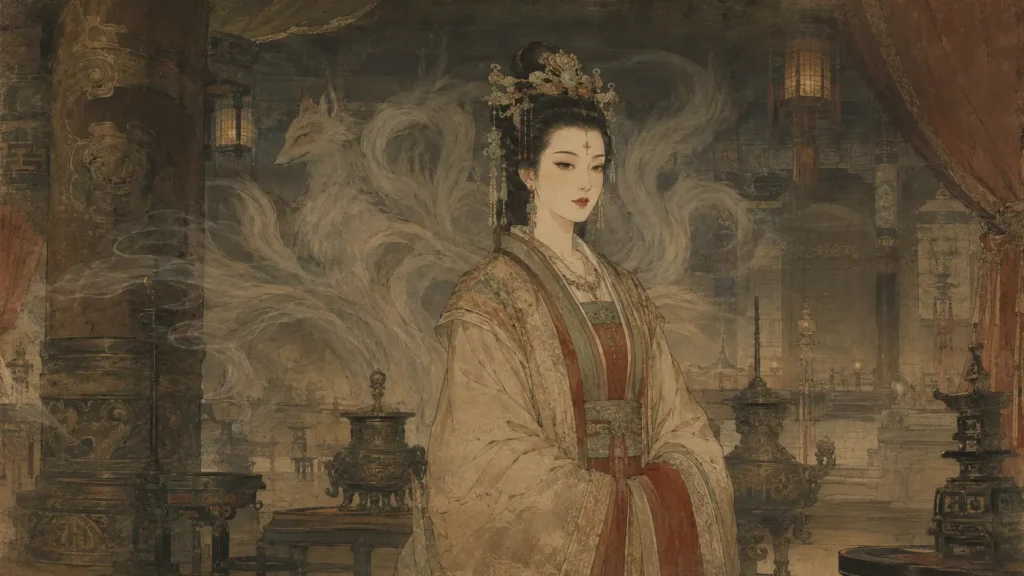
Was Daji a Nine-Tailed Fox?
Not originally.
The strongest connection between Daji and the Nine-Tailed Fox comes from the Ming novel Fengshen Yanyi, also known as Investiture of the Gods.
In the novel, Su Daji begins as a human noblewoman and daughter of Su Hu. While travelling toward the Shang capital, she stops at Enzhou Inn.
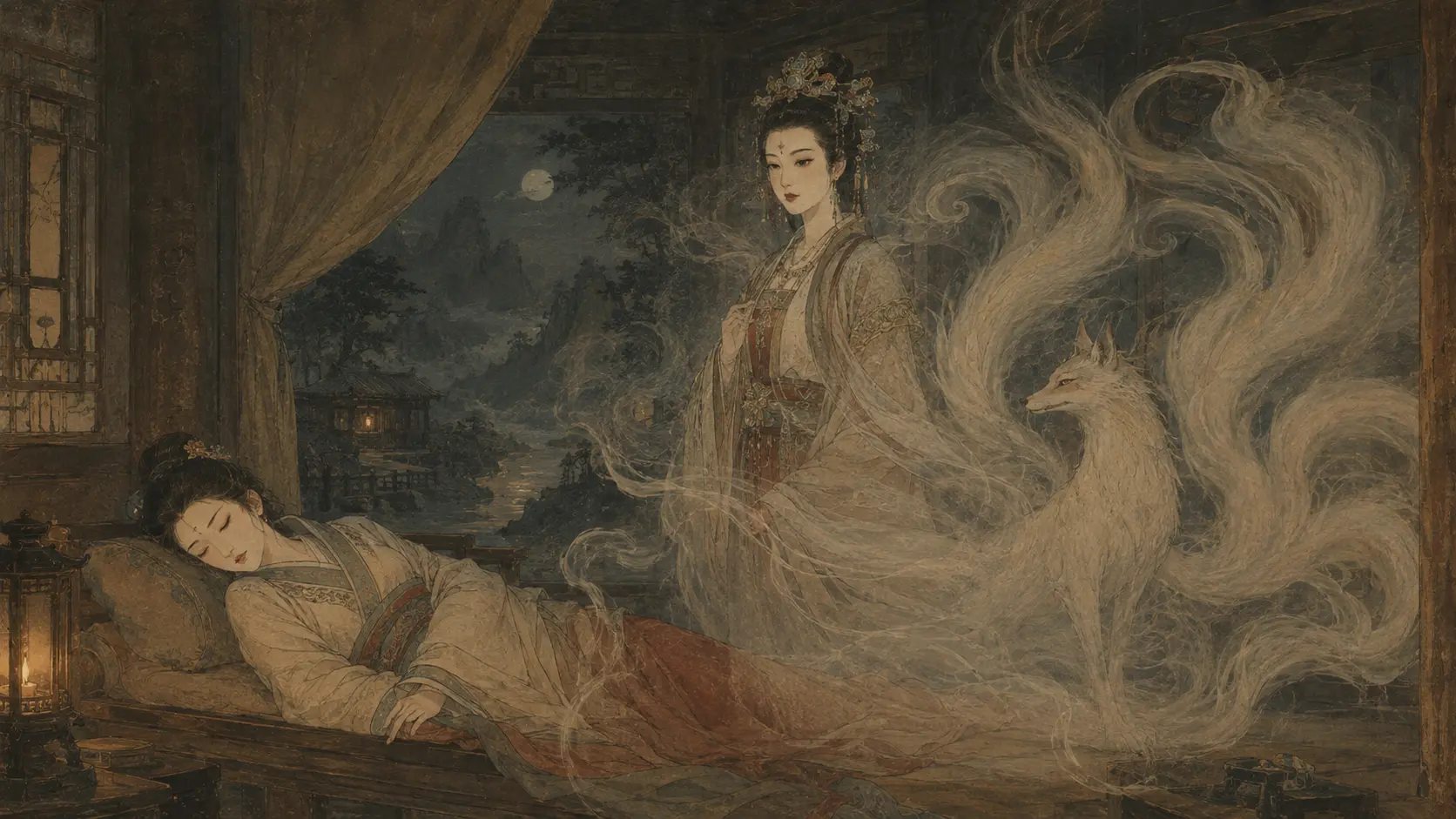
There, a thousand-year-old fox spirit consumes her soul and takes control of her body.
The being that later enters King Zhou’s palace looks like Daji, speaks as Daji, and carries her name—but the original woman is already gone.
Near the end of the novel, Jiang Ziya exposes the truth directly: the figure known as Daji is the Nine-Tailed Fox that killed Su Daji and used her body as a vessel.
The clearest answer is therefore:
Daji was a human woman. In Fengshen Yanyi, a Nine-Tailed Fox spirit steals her identity and becomes the Daji remembered in the supernatural legend.
How Fengshen Yanyi Transformed Daji
The novel places Daji inside a much larger conflict involving gods, spirits, rulers, warriors, and the approaching end of the Shang dynasty.
After King Zhou insults Nüwa at her temple, the goddess summons supernatural spirits as the dynasty moves toward its destined collapse. The thousand-year-old fox eventually assumes Daji’s identity and gains access to the centre of Shang power.
This transformed an old political figure into a supernatural antagonist.
The legendary Daji was no longer simply a consort influencing a ruler. She became a hidden creature capable of appearing completely human while manipulating the court from within.
Her power did not come from commanding an army.
It came from understanding the king.
Daji and King Zhou
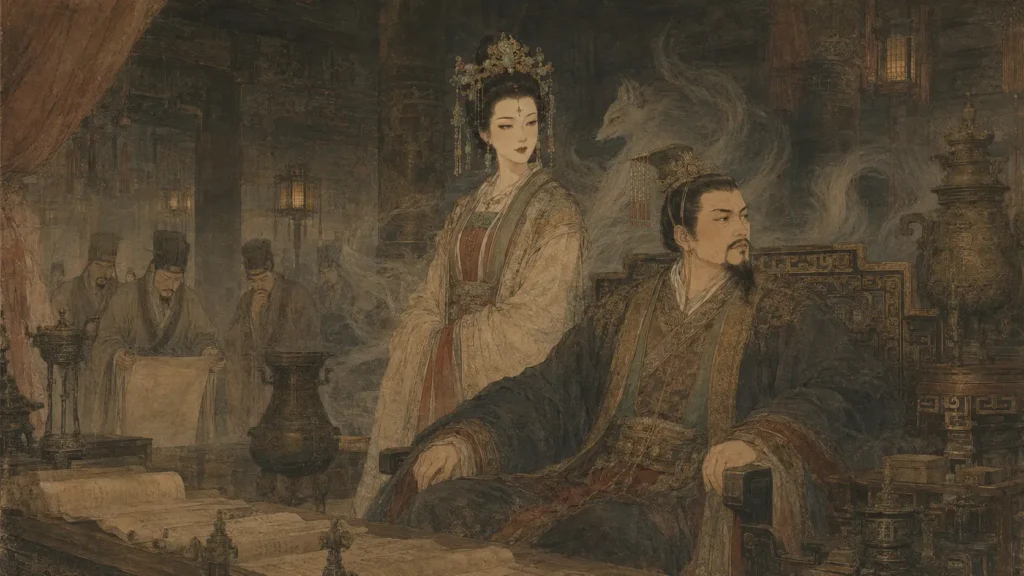
Once inside the palace, the fox spirit becomes King Zhou’s favourite.
In Fengshen Yanyi, he increasingly abandons responsible rule, rejects loyal advice, and participates in acts of cruelty and excess. Daji encourages some of the novel’s darkest events and attempts to eliminate people who threaten to expose her supernatural identity.
Yet King Zhou is not presented as completely innocent.
Daji tempts and manipulates him, but he repeatedly chooses to protect her, satisfy his desires, and ignore the consequences of his actions.
That distinction makes the story more powerful.
The fox spirit represents deception.
King Zhou represents the failure of discipline that allows deception to succeed.
Did Daji Cause the Fall of the Shang Dynasty?
A real dynasty does not collapse because of one woman or one mythical creature.
Political struggles, warfare, alliances, rebellion, leadership failures, and the Zhou conquest all belong to the historical transition from Shang to Zhou.
Traditional stories reduced that complex collapse into a moral narrative. King Zhou became the failed ruler, while Daji became the corrupting influence beside him.
Later fiction made the explanation even more dramatic by turning her into a fox spirit.
Daji did not personally explain every cause behind the fall of Shang.
She gave the fall a recognisable face.
This is why it is important to separate three different layers:
- Daji as a woman remembered in traditional history;
- Daji as a villain shaped by later moral storytelling;
- Daji as the stolen identity of a fox spirit in Fengshen Yanyi.
Treating all three as one perfectly consistent biography would erase how her legend actually developed.
How Daji Changed the Image of the Nine-Tailed Fox
The Nine-Tailed Fox existed long before the literary Daji.
Early descriptions in the Shan Hai Jing place nine-tailed foxes in Qingqiu. Later traditions could treat the creature as dangerous, mysterious, or even auspicious. Daji was therefore not the origin of the Nine-Tailed Fox tradition.
What she changed was its reputation.
Through Daji, the fox became closely associated with:
- beautiful disguises;
- seduction and manipulation;
- hidden supernatural identity;
- political corruption;
- the destruction of royal power.
The broader history of the creature—its origin in Qingqiu, changing symbolism, nine tails, and development from omen to demon—belongs in our dedicated guide to the Nine-Tailed Fox in Chinese mythology.
Daji’s story focuses on one particular fox and the human identity it stole.
Why Daji Still Matters
Daji is often reduced to a warning about dangerous beauty.
But that is only half of the lesson.
Beauty did not rule the Shang dynasty.
King Zhou did.
The fox could tempt him, flatter him, and hide the truth, but the ruler still possessed the responsibility to control himself and listen to those who warned him.
That is why Daji’s legend has survived.
She represents deception—but she also reveals why deception works.
It rarely forces people to desire something entirely new.
It offers them permission to surrender to desires they already possess.
The Nine-Tailed Fox entered the palace wearing Daji’s face.
The dynasty began to fall when the man on the throne stopped questioning what he wanted to see.
Read more about the nine-tailed fox.
- Chinese Text Project — Shiji: Annals of Yin — traditional historical account of King Zhou, Daji, and the fall of Shang.
- Chinese Text Project — Fengshen Yanyi, Chapter 1 — King Zhou’s visit to Nüwa’s temple and the beginning of the supernatural plot.
- Chinese Text Project — Fengshen Yanyi, Chapter 4 — the fox spirit consumes the human Daji’s soul and takes her body.