Sun Wukong
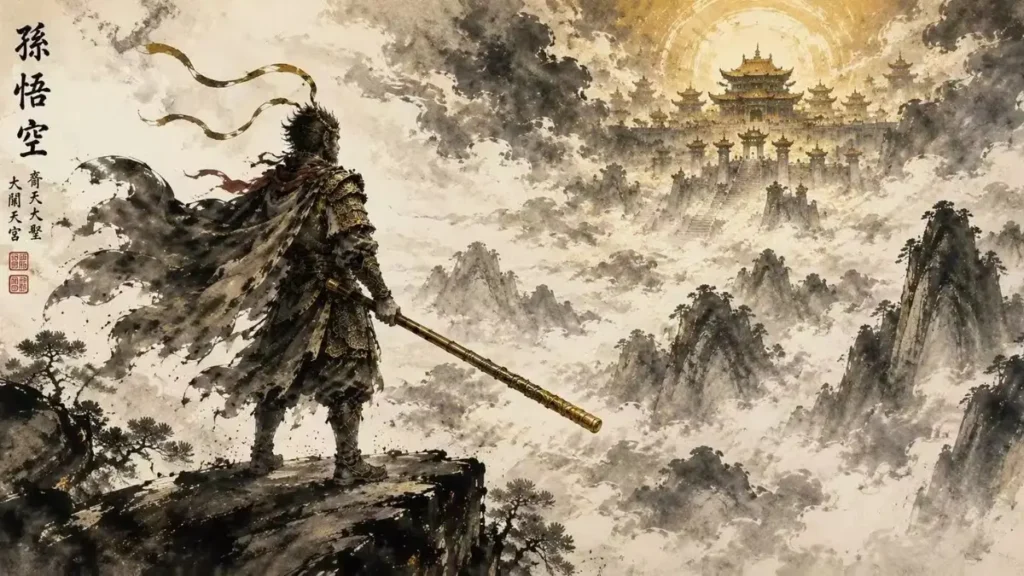
孙悟空 · Sūn WùkōngA stone-born rebel with supernatural strength, transformations and a legendary staff. His journey from defiance to disciplined service gives the novel one of its most powerful character arcs.
Explore Sun Wukong's Story →Enter the world of Sun Wukong, Tang Sanzang and the legendary pilgrimage that became one of China’s most influential stories. Explore its heroes, divine beings, demons, trials and the path from rebellion toward discipline and enlightenment.
Meet the PilgrimsJourney to the West (西游记, Xīyóu Jì) is a Chinese novel published during the Ming dynasty and traditionally attributed to Wu Cheng’en. The familiar story combines adventure, comedy, religion, mythology and supernatural fantasy across a hundred-chapter pilgrimage.
Its central mission is inspired by the historical Buddhist monk Xuanzang, who travelled from China toward India in the seventh century in search of Buddhist scriptures. The novel transforms that historical journey into a vast mythological adventure led by the literary monk Tang Sanzang.
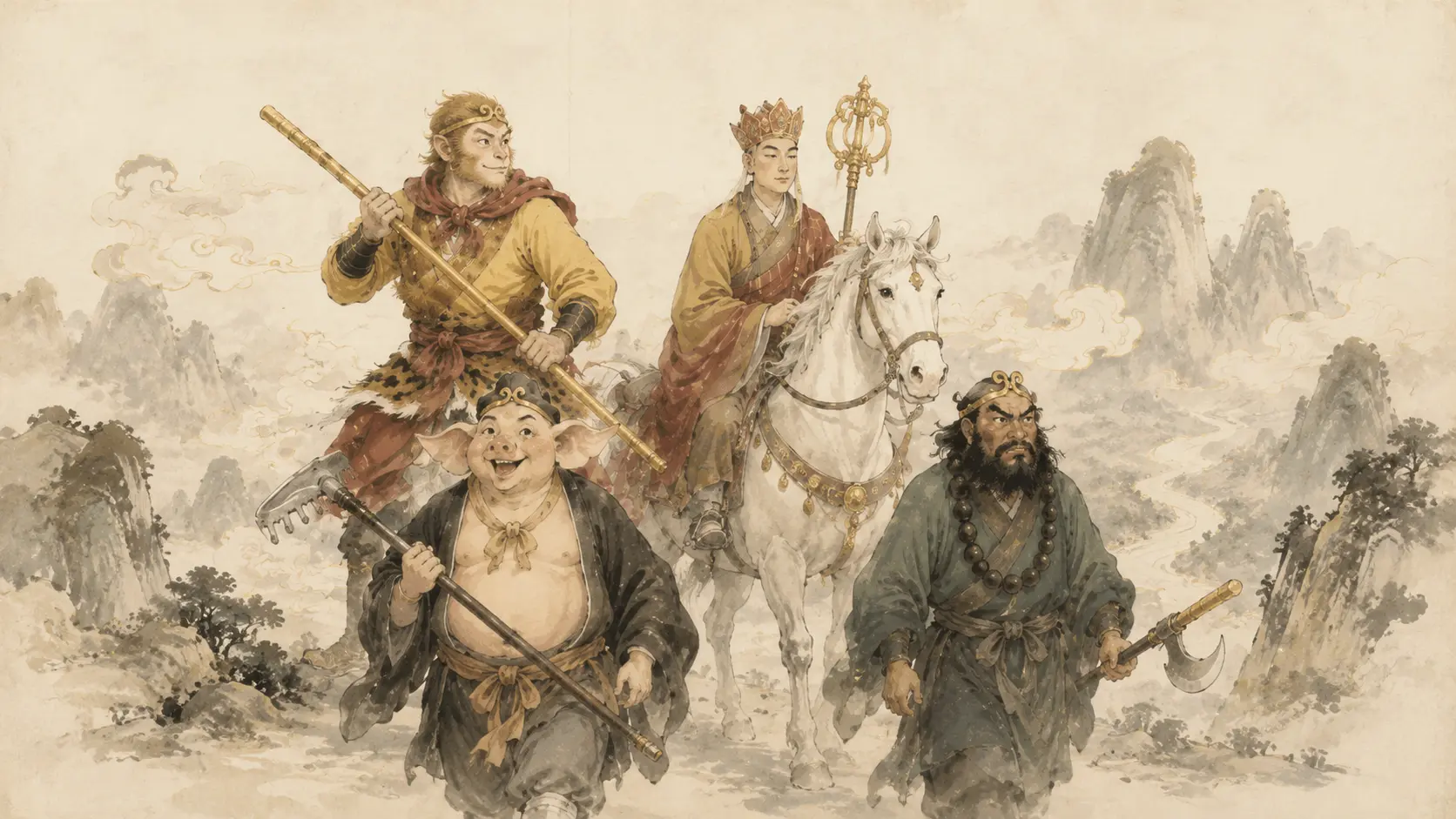
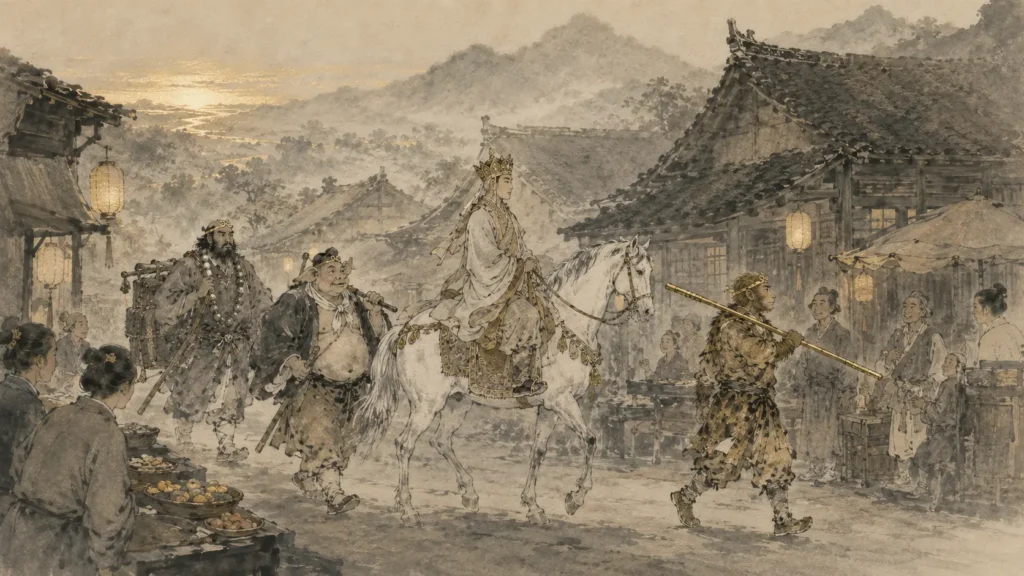
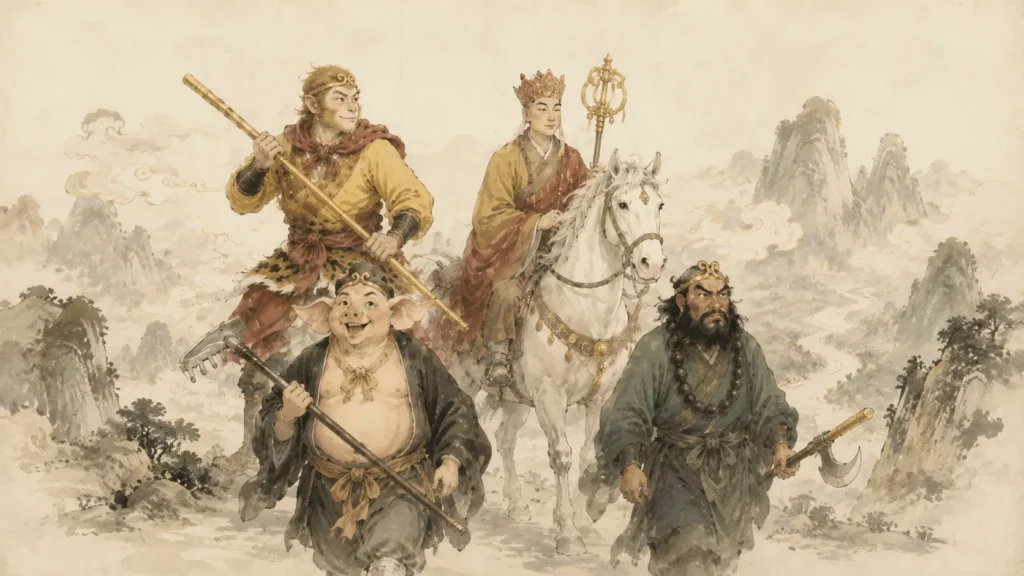
Protecting him are Sun Wukong, Zhu Bajie, Sha Wujing and the White Dragon Horse. Their road passes through monsters, celestial courts, Buddhist and Daoist figures and repeated trials that test loyalty, desire, discipline and spiritual transformation.
The journey works because its travelers are radically different. Each carries different strengths, weaknesses and reasons for walking west.
A stone-born rebel with supernatural strength, transformations and a legendary staff. His journey from defiance to disciplined service gives the novel one of its most powerful character arcs.
Explore Sun Wukong's Story →The Buddhist monk who leads the scripture pilgrimage and the literary counterpart of the historical traveler Xuanzang.
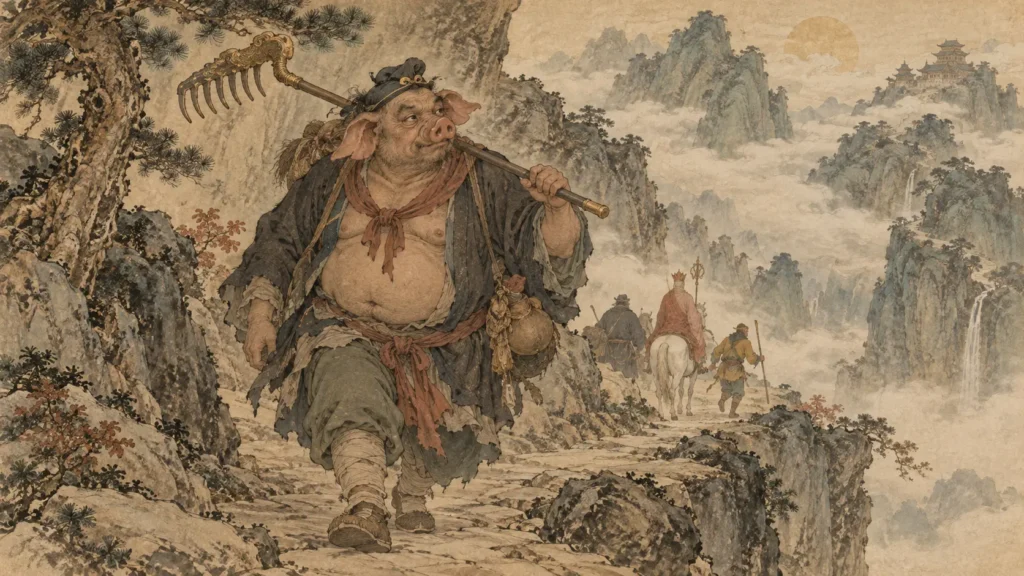
A former celestial marshal whose appetite, laziness and loyalty make him both comic relief and one of the journey’s most human characters.
The quiet and dependable disciple whose patience and steady service often hold the group together.
A dragon prince transformed into Tang Sanzang’s white horse and a largely silent but essential member of the pilgrimage.
The novel contains many episodes, but its larger transformation becomes much easier to understand when viewed through four major stages.
Born from stone, the Monkey King searches for immortality, masters supernatural arts and grows powerful enough to challenge the authority of Heaven.
Wukong’s defiance reaches the Celestial Court. His rebellion eventually ends beneath a mountain, where raw power finally meets a limit it cannot defeat.
Tang Sanzang travels west for Buddhist scriptures while Wukong, Bajie, Wujing and the White Dragon Horse gradually join the mission.
Repeated encounters with monsters, temptation and divine powers turn the physical journey into a path of discipline, redemption and spiritual change.
The novel survives because its monsters, battles and magic carry deeper questions about power, weakness, belief and self-control.
Sun Wukong begins with enormous capability but very little restraint. The pilgrimage gives that power direction, responsibility and purpose.
Buddhist figures, Daoist immortals, celestial officials, local spirits and literary monsters coexist inside the same story world without becoming one perfectly uniform religious system.
The historical pilgrimage of Xuanzang provides a foundation, but the novel transforms that journey through centuries of storytelling, mythology and literary invention.
The Monkey King Who Challenged Heaven
Before the pilgrimage could transform him, Sun Wukong first had to become powerful enough to terrify Heaven. Follow his story from his birth from stone and search for immortality to rebellion, imprisonment and eventual role as Tang Sanzang’s protector.
Explore Sun Wukong's Story →Explore new characters, battles, demons and stories added to the Journey to the West archive.
Becoming Konstantin separates the sixteenth-century literary story from the historical journey that helped inspire it, while comparing reliable translations, classical material, academic research and cultural sources when interpreting characters and events.
Modern adaptations are treated as later interpretations rather than evidence that every film, game or television version belongs to the original novel.
Journey to the West is one path through a much larger mythological world. Continue into Chinese gods and immortals, legendary creatures, creation myths and the strange beings of the Shan Hai Jing.
Explore Chinese Mythology