Imagine hearing a baby crying somewhere in the mountains.
You follow the sound.
There are no houses nearby. No travelers. No child waiting between the trees.
Then something steps into view.
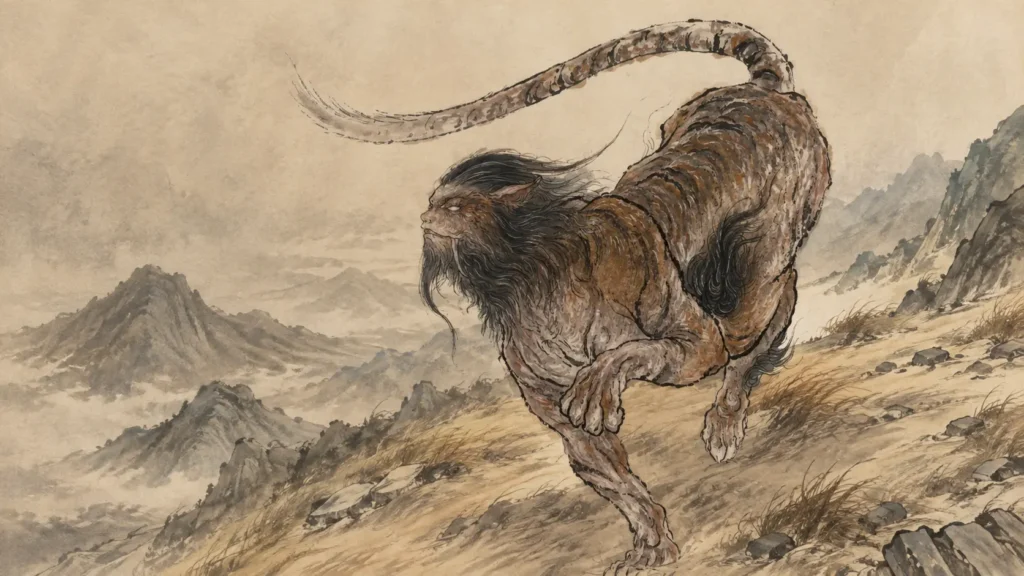
Its body belongs to a tiger.
Its face looks disturbingly human.
And the crying is coming from it.
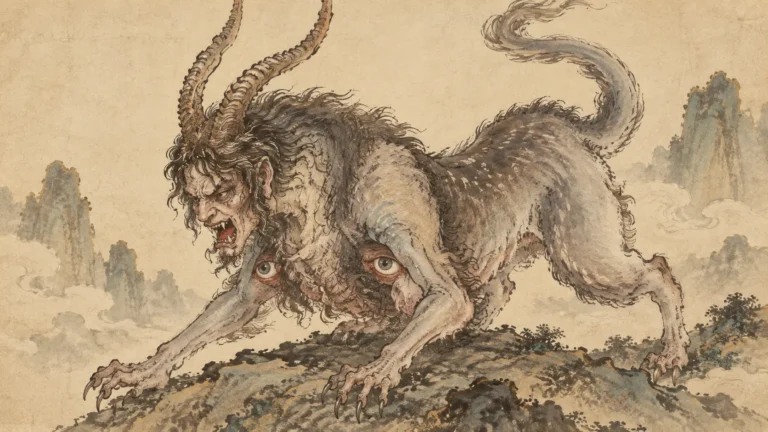
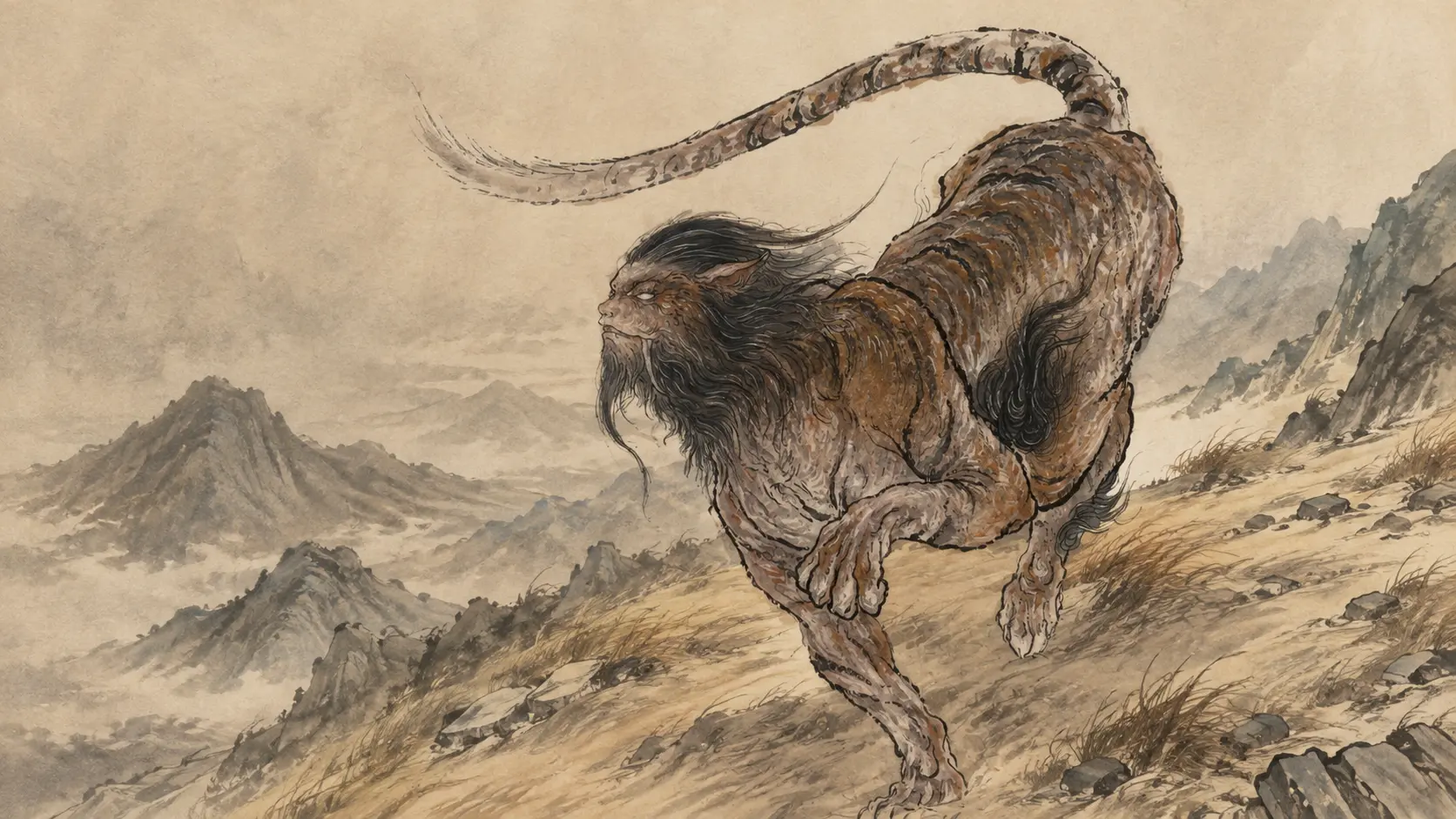
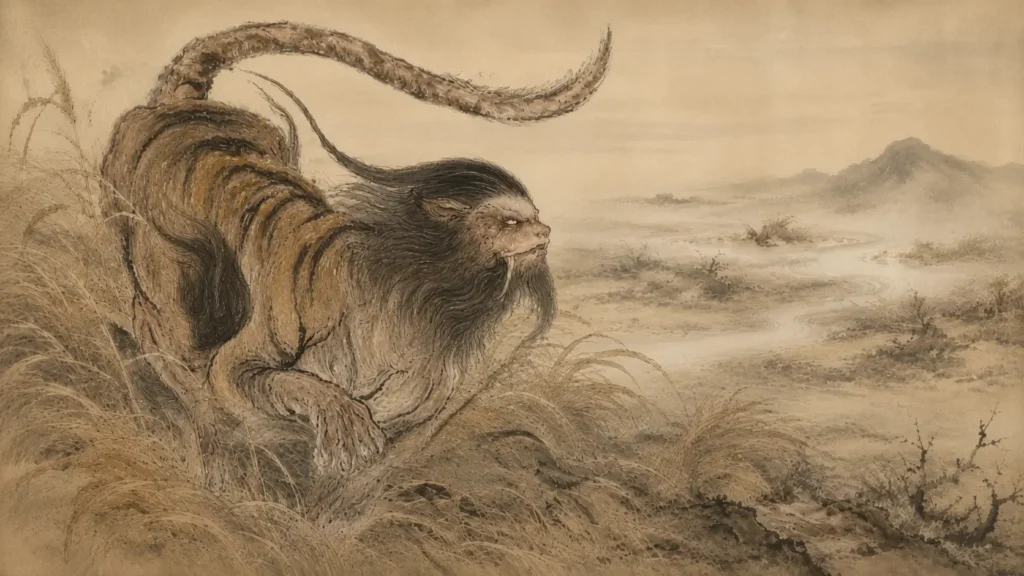
Mafu (马腹, Mǎfù) is a man-eating beast recorded in the ancient Chinese Shan Hai Jing. The text describes it with a human face, the body of a tiger, and a voice resembling the cry of an infant.
The original description lasts only a few lines.
It does not need more.
What Is Mafu?
Mafu appears in the Zhongshan Jing, or Classic of the Central Mountains, section of the Shan Hai Jing.
The creature lives around Mount Manqu (蔓渠之山), a mountain described as rich in gold and jade, with bamboo growing below its slopes. The Yi River begins there before flowing east toward the Luo River.
Then the text introduces Mafu almost without warning:
a human face, a tiger’s body, a baby’s cry—and an appetite for humans.
Unlike some Shan Hai Jing creatures, Mafu is not an omen.
Its appearance does not predict war, drought, or political collapse.
The danger is much simpler.
Mafu itself is the threat.
Why Does Mafu Look So Disturbing?
The combination is unusually effective because both halves are familiar.
A tiger is already one of the most powerful predators known to ancient China.
A human face should make something feel more recognizable.
Together, they do the opposite.
Mafu belongs to a recurring pattern within the Shan Hai Jing, where human and animal characteristics are combined into beings that resist ordinary categories. The text contains other tiger-like creatures with human characteristics, although their roles and appearances differ greatly.
But Mafu receives none of the grandeur of a divine guardian.
It is simply described as something that eats people.
That makes its human face even more unsettling.
The Cry of a Human Baby
Mafu’s most memorable characteristic may not be its appearance at all.
It is its voice.
The original text says:
其音如婴儿 — “its sound is like an infant.”
The Shan Hai Jing uses baby-like cries for several strange animals, so this is not unique to Mafu. But combined with a human face and predatory tiger body, the effect is especially eerie.
We should also resist adding a modern horror explanation.
The ancient text does not say Mafu deliberately imitated babies to lure travelers.
That would make a great monster story—but it would be something we invented.
All we actually know is that its cry sounded like one.
Sometimes the original image is disturbing enough.
Did Mafu Really Live Near the Yi River?
Later Chinese writers tried to connect Mafu with other dangerous creatures associated with water.
A much later encyclopedic tradition compared Mafu with creatures known as shuihu (水虎, “water tiger”), shuitang, and shuilu. Those texts describe dangerous water beings and argue that they may represent alternative names or related traditions surrounding Mafu.
That is interesting, especially because the Shan Hai Jing places Mafu near the source of the Yi River.
But it is important not to collapse the traditions into one certainty.
The original passage does not call Mafu a water tiger, does not say that it lives underwater, and does not describe aquatic abilities.
Those connections belong to later commentary.
For our purposes, the safest image remains the oldest one:
A human-faced tiger living in the strange mountain geography of the Shan Hai Jing.
Was Mafu a Demon?
Not in the way we normally use that word.
The text calls Mafu a 兽 (shòu) — a beast.
There is no surviving origin story telling us that it was once human, that a god created it, or that it possessed people.
There is no magical curse.
No divine mission.
No moral explanation.
Mafu is simply one of the dangerous beings inhabiting the ancient landscape.
And perhaps that is why it works so well.
A monster with an elaborate reason for existing can sometimes be understood.
Mafu receives no explanation.
It is there because the mountains contain things humans do not understand.
The Fear Behind Mafu
Ancient wilderness was not scenery.
Mountains, forests, rivers, and predators could genuinely kill travelers.
The Shan Hai Jing transforms that uncertainty into geography filled with impossible animals.
Mafu represents that world perfectly.
Its tiger body reflects a real predator.
Its human face breaks the boundary between person and beast.
Its infant-like cry turns a sound associated with vulnerability into a warning.
And the final statement removes all uncertainty:
It eats people.
There is no heroic battle attached to Mafu.
No famous warrior defeats it.
Perhaps no one was supposed to.
The safest response to hearing a baby cry somewhere on Mount Manqu may have been very simple:
Do not go looking for it.
Reference:
- Chinese Text Project — Shan Hai Jing: Zhongshan Jing — primary ancient passage describing Mount Manqu and Mafu.
- Chinese Text Project — Mafu parallel passage — exact Chinese text describing the human face, tiger body, infant-like cry, and man-eating behavior.