At first, it looks like a fish.
Then you notice the feet.
They belong to a chicken.
A few words in the Shan Hai Jing are enough to change the whole picture.
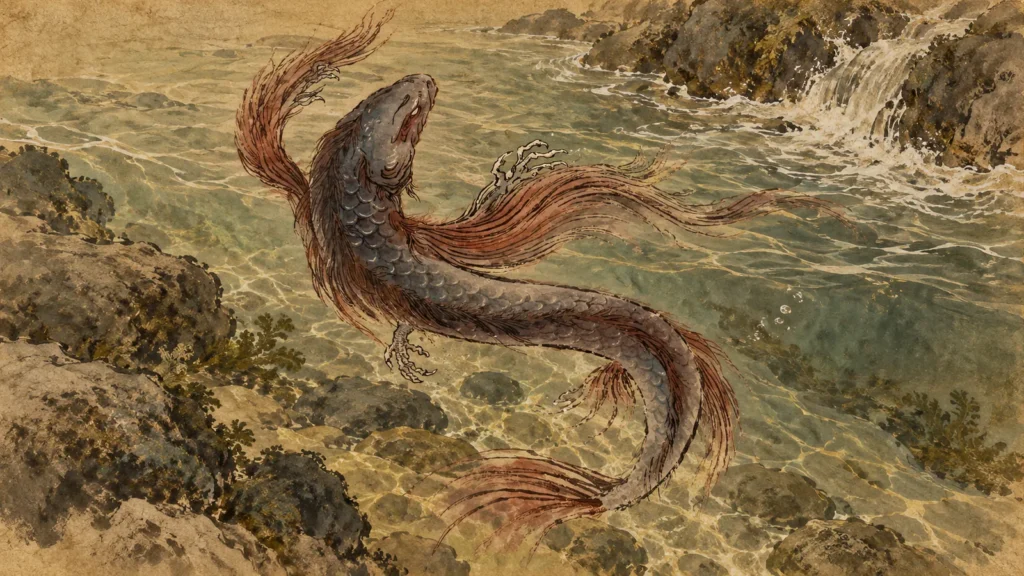
Zao fish (䲃魚 / 䲃鱼, Zǎoyú) is a carp-like creature with chicken feet in the Northern Mountains section of the Shan Hai Jing.
It inhabits the Huaize waters below Mount Yufa. The ancient account also attributes a wart-removing effect to eating it—a historical belief, not a demonstrated treatment.
Zao Fish at a Glance
| Detail | Zao fish |
|---|---|
| Chinese name | 䲃魚 / 䲃鱼 |
| Pinyin | Zǎoyú |
| Source | Shan Hai Jing — Northern Mountains, first route |
| Location | Mount Yufa (獄法之山); Huaize waters |
| Appearance | Like a carp, with chicken feet |
| Attributed property | Eating it was said to remove warts |
| Name in later sources | 䲃, with the pronunciation gloss zǎo |
What Does the Zao Fish Look Like?
The description begins with something familiar: a body like a carp.
Its chicken feet provide the strange detail. The passage gives no number of legs, exact size or color.
It also gives no voice or account of how the animal moves. The feet invite us to imagine an encounter, but the text leaves that encounter unwritten.
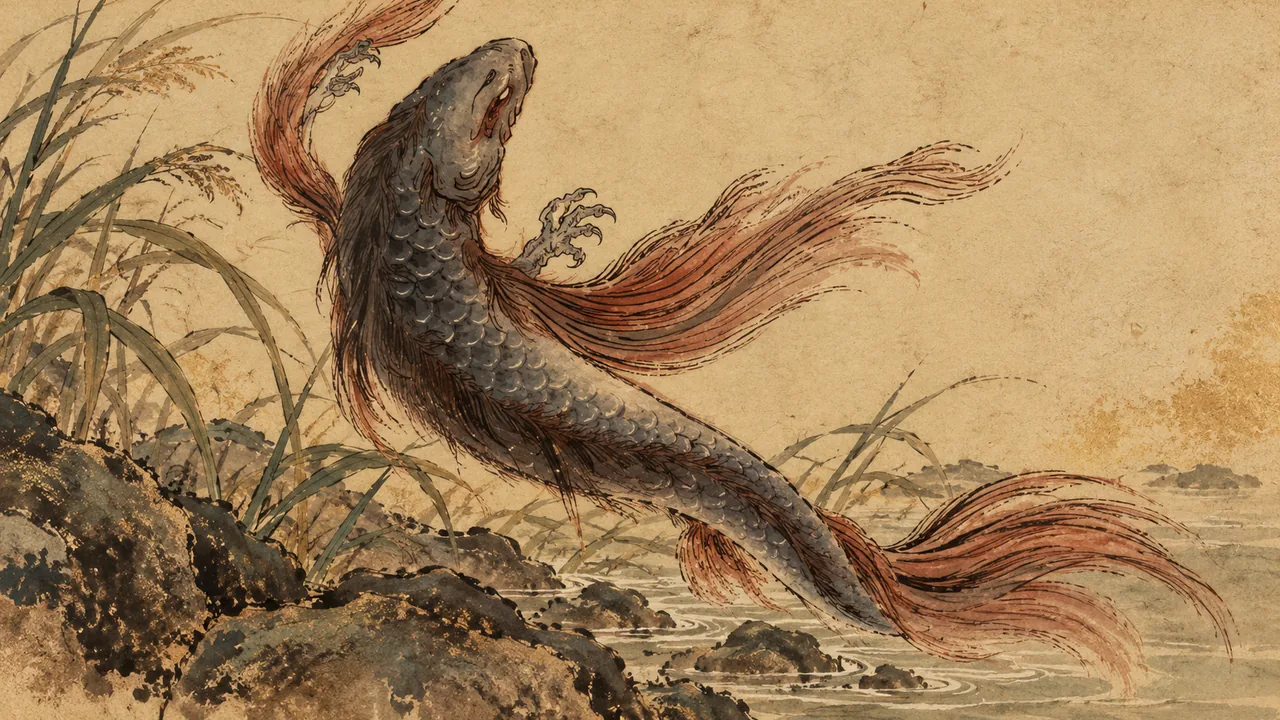
The illustrations here follow a modern interpretation with a long, scaled body, sweeping fins and clawed feet. The flowing fins are an artistic choice; the short classical description does not call them wings.
The Lihu offers another unsettling combination: a waterbird with human feet. In each case, one altered feature makes an otherwise recognizable animal unfamiliar.
Where Does the Zao Fish Live?
The Northern Mountains account places it in the Huaize waters, which rise at Mount Yufa and flow northeast into Taize.
The mountain name is written 獄法 in the Siku edition used here. Some modern digital transcriptions print 岳法, producing the alternative romanization Yuefa.
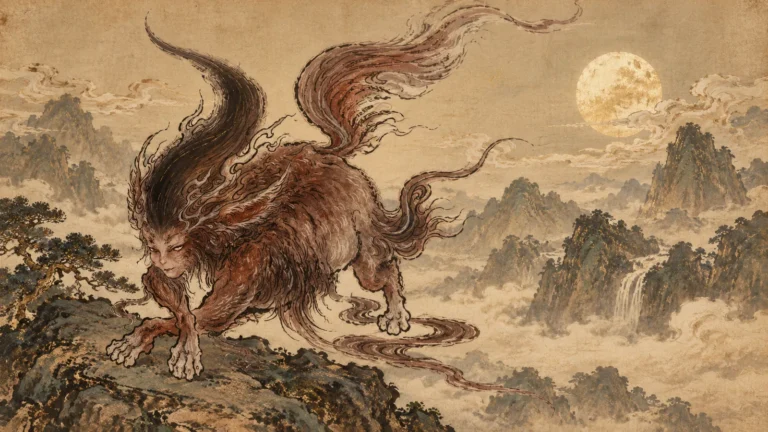
The same mountain entry then introduces Shan Hui, the dog-like beast with a human face.
The two creatures share a setting, but their descriptions remain separate. The wind omen belongs to Shan Hui. The fish receives its own brief description in the water.
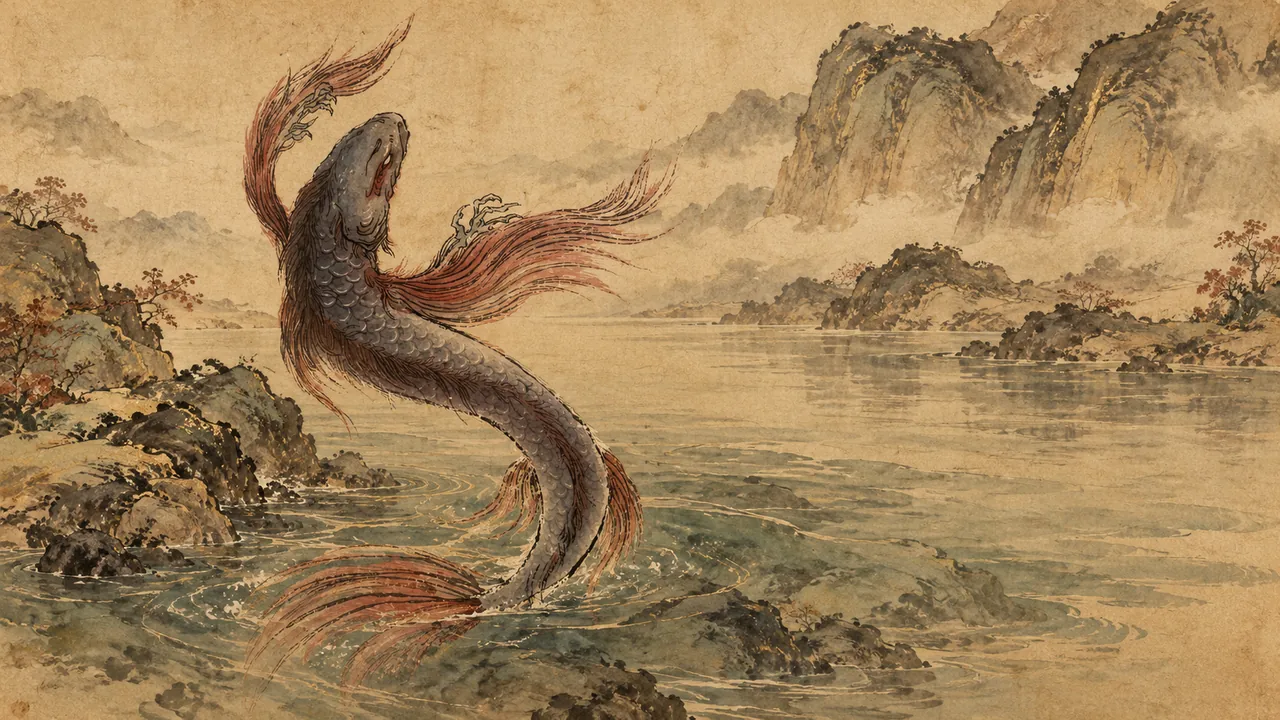
This movement from mountain to river to creature recurs throughout the Shan Hai Jing creature collection. A creature often enters the record as part of a place rather than the hero of a long story.
What Did the Ancient Text Claim About It?
The final statement about the fish is 食之已疣: eating it was said to remove warts.
That is an attributed property within the ancient account. It does not establish medical efficacy or identify a real species that should be eaten.
Modern explanations sometimes expand this line into a confident claim about medicinal value. Keeping the original wording in view helps preserve the difference between an old belief and evidence for a treatment.
A Rare Name Preserved in Later Books
The rare character 䲃 is read zǎo; 魚 means fish. Together, the name is Zǎoyú.
The Siku text supplies a pronunciation gloss using 藻. The modern annotated page uses 早. Both point to the reading zǎo.
The Taiping Yulan, volume 939, preserves the creature under its own heading, 䲃魚, repeating the carp-like form and chicken feet.
It also quotes an illustrated-text encomium that describes the creature as part bird and part scaled animal. That later quotation emphasizes the same combination without supplying a longer adventure.
Why This Small Description Lasts
The Zao fish needs very little introduction to remain memorable.
A river gives it a setting. The carp gives it a recognizable form. The chicken feet interrupt that familiarity.
Its brief record leaves room for painters to imagine a body and a landscape, while still giving readers a clear detail to check.
Look closely at the feet. That is where the ordinary fish becomes something else.
References & Sources
Shan Hai Jing, Siku edition, volume 3 — the Northern Mountains passage for Mount Yufa, Huaize, the Zao fish and Shan Hui; includes pronunciation glosses.
Taiping Yulan, volume 939, 䲃魚 — the later encyclopedic quotation of the fish and its bird-and-scales description.
Chinese Text Project dictionary: 䲃 — pronunciation, dictionary attestations and variant-character information.
Shan Hai Jing, Eastern Mountains — the separate Lihu passage used for comparison.