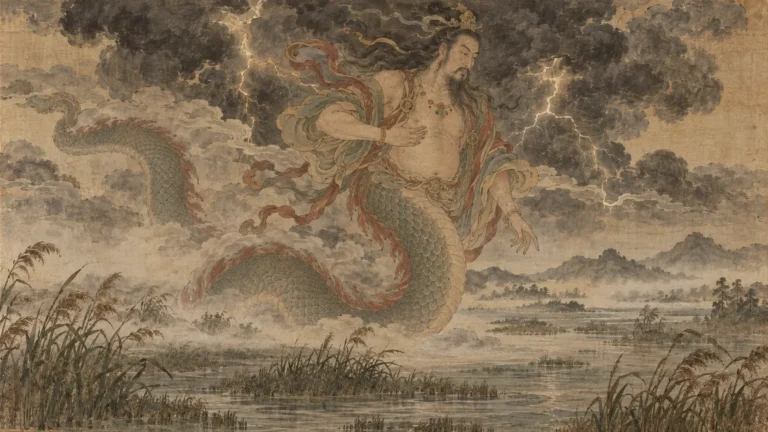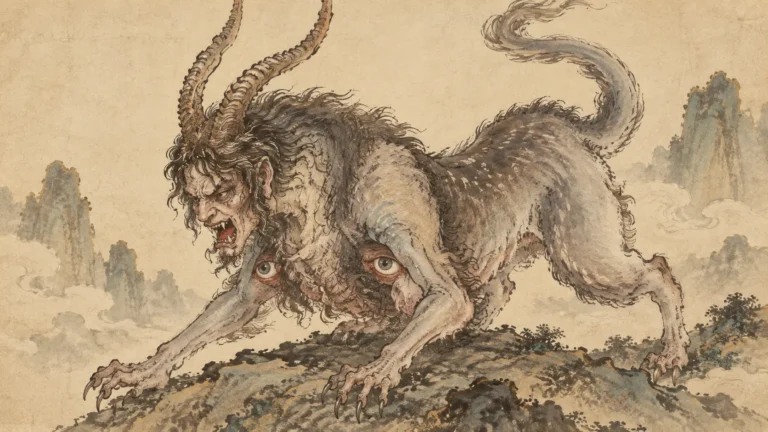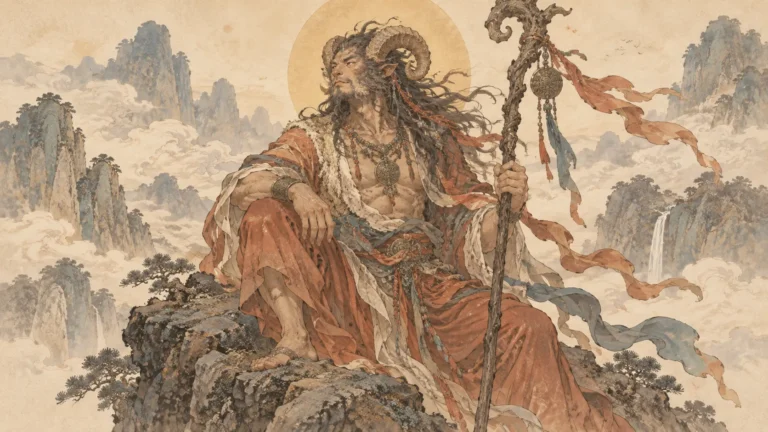
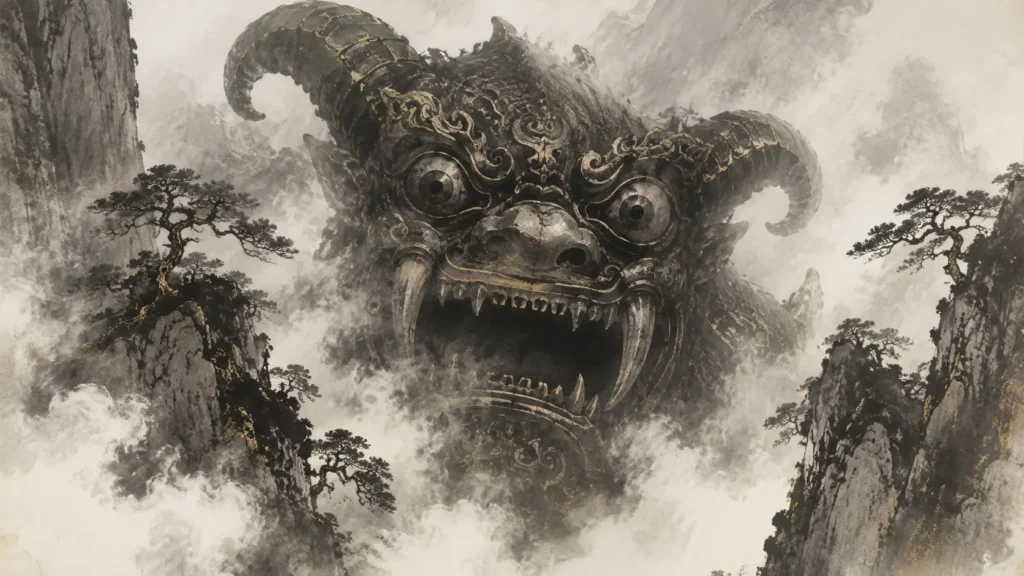
Some monsters terrify people because they are powerful.
Others because they are cruel.
But Taotie became legendary for something far more familiar.
It could never stop wanting more.
Unlike dragons that ruled the skies or fox spirits that deceived humans, Taotie represented an enemy that every person eventually faces—not a creature outside the world, but the endless desire growing inside ourselves.
For more than three thousand years, its face has stared silently from ancient Chinese bronze vessels, temples, and ceremonial objects. It has almost no body, no complete story, and very few surviving myths.
Yet somehow, Taotie became one of the most recognizable creatures in all of Chinese mythology.
A Beast Hidden in Ancient Bronze
Unlike many mythical creatures, Taotie first became famous through art rather than literature.
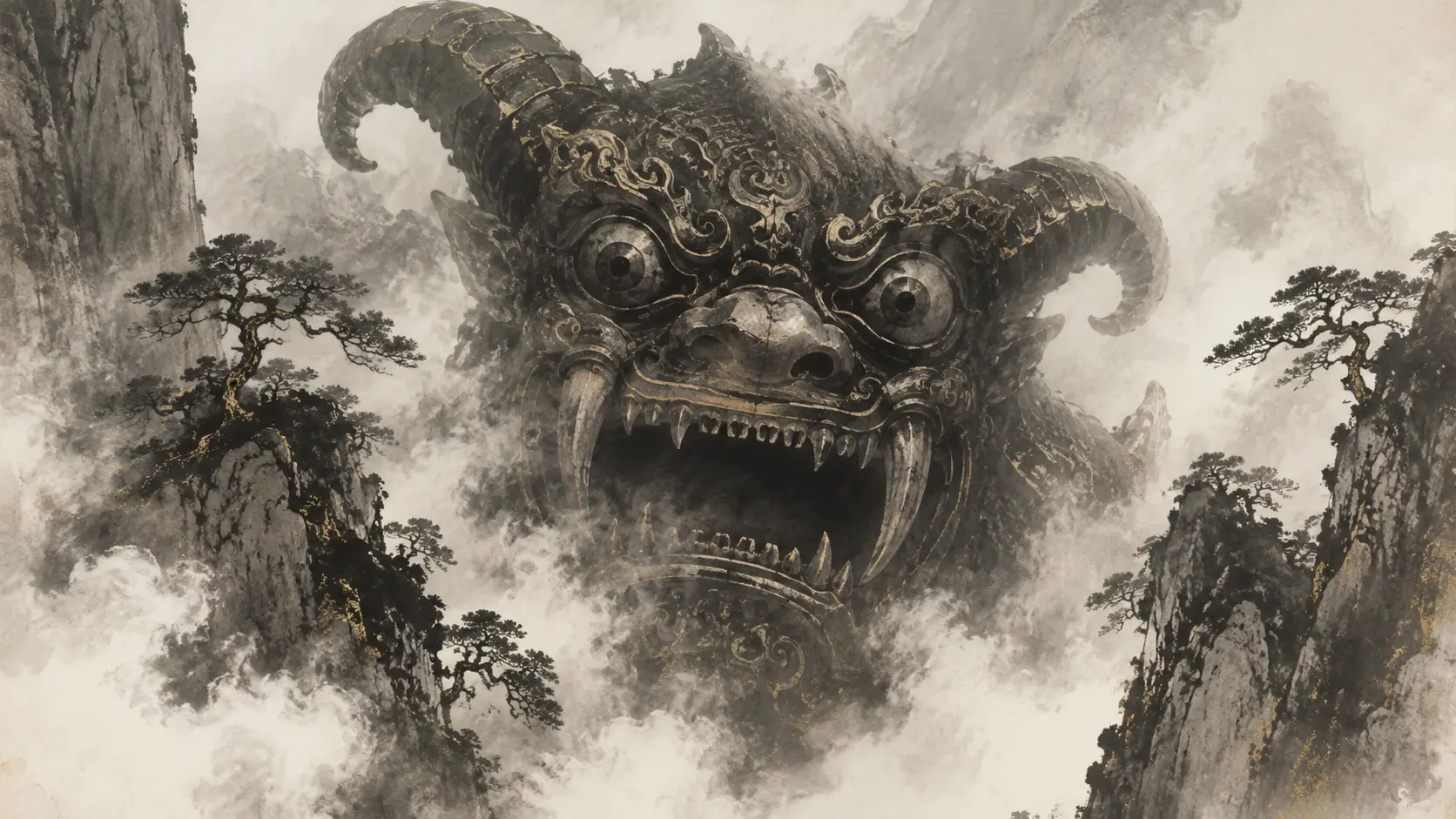
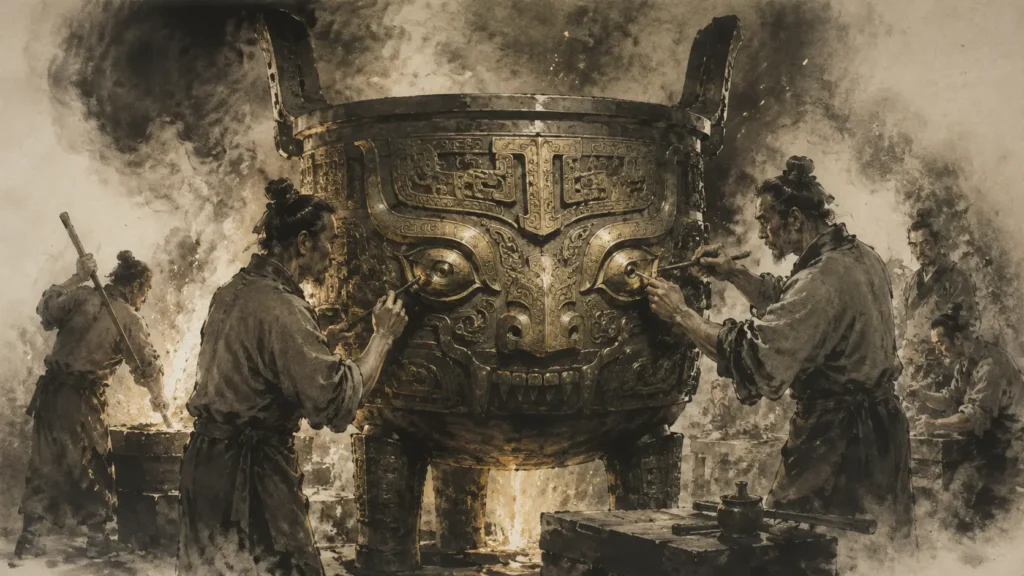
During the Shang and Zhou dynasties, craftsmen decorated ritual bronze vessels with a striking mask unlike anything else. Massive staring eyes, curled horns, sharp fangs, and an enormous mouth dominated the design. Strangely, the creature often appeared without a visible lower jaw or body, making it seem as if only its hungry face existed.
Modern historians call this design the Taotie motif.
Whether ancient people originally intended it to represent a specific beast remains debated, but over centuries the terrifying face became associated with a creature driven by limitless appetite.
Its appearance alone was enough to warn people about excess.
The Monster That Could Never Be Satisfied
Later Chinese traditions describe Taotie as a beast consumed by endless hunger.
No matter how much it ate, satisfaction never came.
Food, wealth, power, and possessions were never enough.
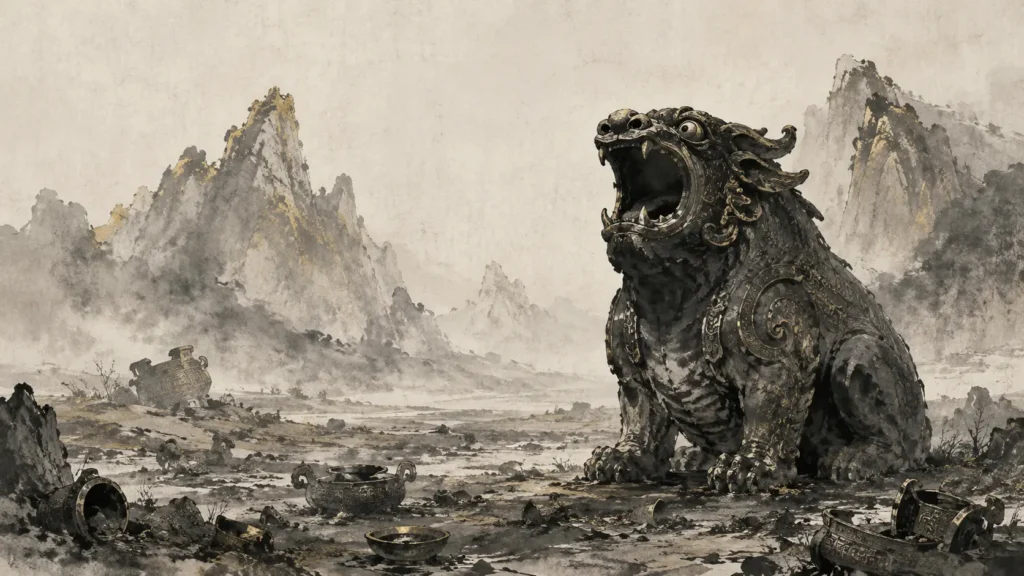
Some stories say the creature became so obsessed with feeding itself that it eventually consumed everything around it.
Other legends claim it even destroyed itself because its appetite had no limits.
Unlike monsters defeated by swords or heroes, Taotie was defeated by its own nature.
Its greatest enemy was never someone else.
It was itself.
One of the Four Perils
In later Chinese folklore, Taotie became one of the Four Perils, alongside Hundun, Qiongqi, and Taowu.
Each represented a different destructive human quality.
While the others symbolized chaos, cruelty, or stubborn ignorance, Taotie embodied greed.
This made it more than a mythical beast.
It became a moral symbol.
Ancient storytellers weren’t simply warning people about dangerous monsters hiding in forests.
They were warning them about dangerous habits hiding inside every human being.
Why Was Taotie Placed on Ritual Vessels?
One of the greatest mysteries surrounding Taotie is why its face appears on ceremonial bronze vessels used during ancestral rituals.
Historians still debate the answer.
Some believe the terrifying image protected sacred ceremonies by frightening away evil spirits.
Others think it reminded nobles and rulers to avoid excess during feasts and religious rituals.
Another interpretation suggests the mask represented the thin line between abundance and greed.
Whatever its original meaning, one fact remains clear.
For thousands of years, generations of Chinese artists continued carving the same mysterious face, giving Taotie a place unlike any other creature in Chinese mythology.
A Symbol That Never Disappeared
Although the old kingdoms vanished long ago, Taotie never truly disappeared.
Its distinctive mask can still be found on museum artifacts, architecture, jewelry, video games, films, and modern artwork inspired by ancient China.
Unlike creatures remembered through epic adventures, Taotie survived because of an idea.
Greed never became outdated.
Neither did the warning against it.
That timeless message continues to make Taotie relevant today.
What Can We Learn From Taotie?
Taotie reminds us that not every battle is fought with weapons.
Some are fought with discipline.
In today’s world, endless consumption surrounds us. More money, more possessions, more followers, more entertainment, more distractions. It is easy to believe that happiness always lies in getting one more thing.
Taotie shows where that path can lead.
The creature was never defeated by another monster. It was consumed by its inability to say, “Enough.”
That is why its story still matters.
For a warrior, strength is not measured by how much he can take.
It is measured by how much he can control.
The greatest victory is often mastery over your own desires.
References and Sources
Chinese Text Project — Lüshi Chunqiu, “Xian Shi”
An early textual description of Taotie as a creature shown on Zhou ritual vessels with a head but no body, harmed by its own uncontrolled appetite. Chinese Text Project — Zuo Zhuan, Duke Wen, Eighteenth Year
The classical passage connecting Taotie with greed, excessive consumption, the Jinyun clan, and the group traditionally known as the Four Perils. The Metropolitan Museum of Art — Shang and Zhou Dynasties: The Bronze Age of China
Museum overview of Shang and Zhou ritual bronzes and the distinctive animal-mask design conventionally called the Taotie motif.