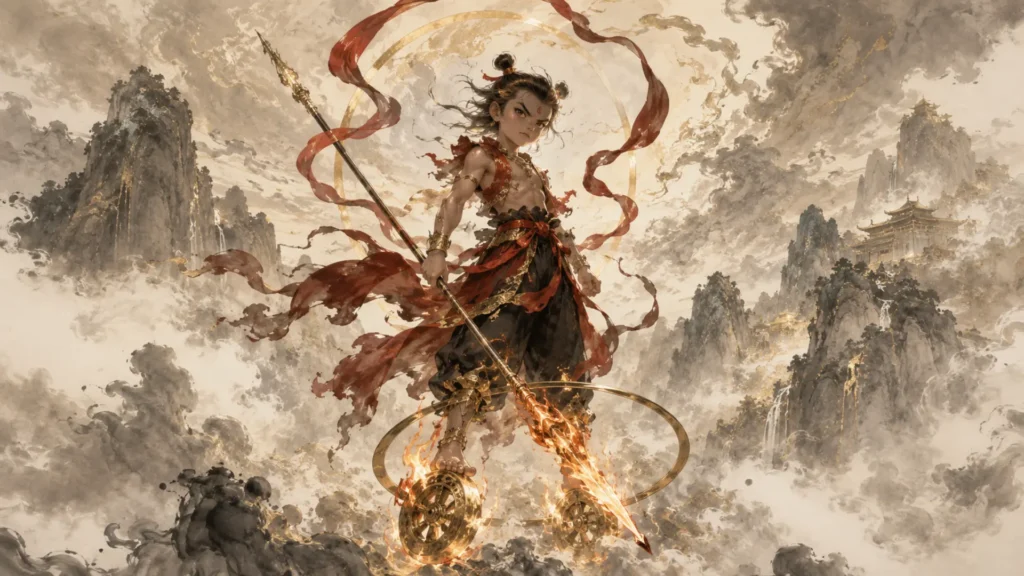
In Chinese mythology, few figures are as fierce, tragic, and unforgettable as Nezha.
Known as Nezha (哪吒), he is a young warrior god famous for his rebellious spirit, supernatural weapons, lotus body, and battle against the Dragon King. Unlike many gods who represent calm authority or ancient wisdom, Nezha represents something more explosive: youthful power, defiance, sacrifice, and rebirth.
He is one of the most popular figures in Chinese folklore, appearing in Fengshen Yanyi, Journey to the West, temple worship, animation, films, and modern fantasy stories. To many people, Nezha is not just a child god. He is the symbol of someone who refuses to be controlled by fate.
Who Is Nezha?
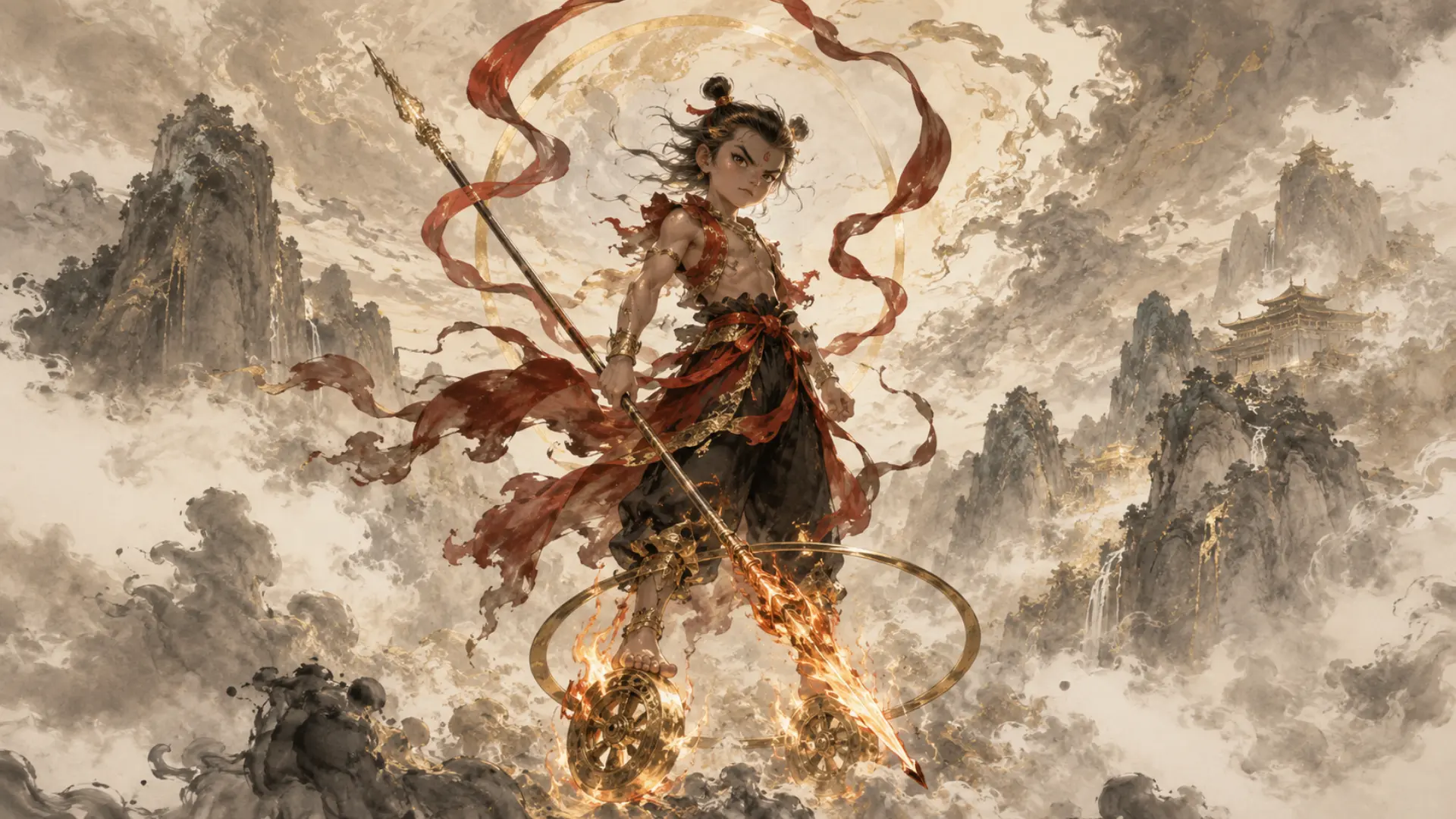
Nezha is a powerful warrior deity in Chinese mythology, often described as the Third Lotus Prince. He is usually shown as a young boy with divine weapons, riding on Wind Fire Wheels and holding his famous Fire-tipped Spear.
Although he appears youthful, Nezha is not weak or innocent. He is a fearless fighter with immense supernatural strength and a fiery personality. He challenges dragons, battles demons, protects the innocent, and stands against unfair authority.
In many stories, Nezha serves the Heavenly Court as a divine general. However, his most famous legends focus on his difficult childhood, his conflict with the Dragon King, and his dramatic rebirth through a lotus body.
This combination of tragedy, rebellion, and divine power makes Nezha one of the most emotionally powerful characters in Chinese mythology.
The Birth of Nezha
Nezha was born into the family of Li Jing, a military commander, and his wife Lady Yin. According to legend, Lady Yin carried Nezha in her womb for an unusually long time before giving birth to a mysterious ball of flesh.
When Li Jing saw this strange birth, he feared that it was a demon or an evil omen. He struck the ball with his sword, and from inside emerged Nezha, already alive and filled with divine energy.
Soon after his birth, Nezha became the disciple of the immortal master Taiyi Zhenren, who gave him powerful magical weapons. From the very beginning, Nezha was not an ordinary child. He was born with a destiny tied to Heaven, war, and transformation.
His strange birth also hints at one of the central themes of his story: Nezha was never meant to live a normal life.
Nezha and the Dragon King
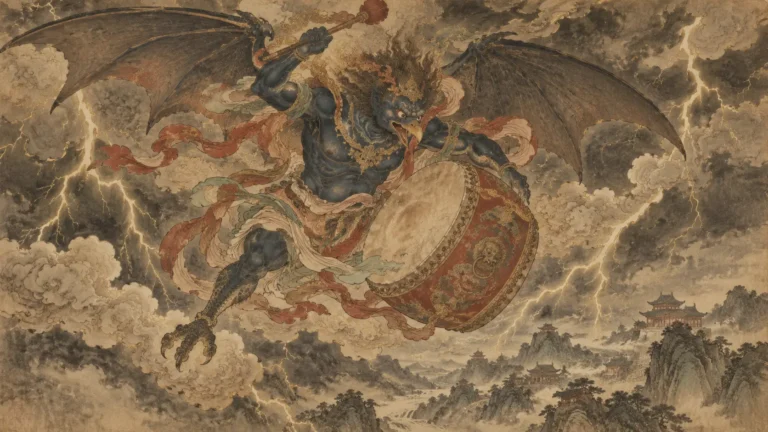
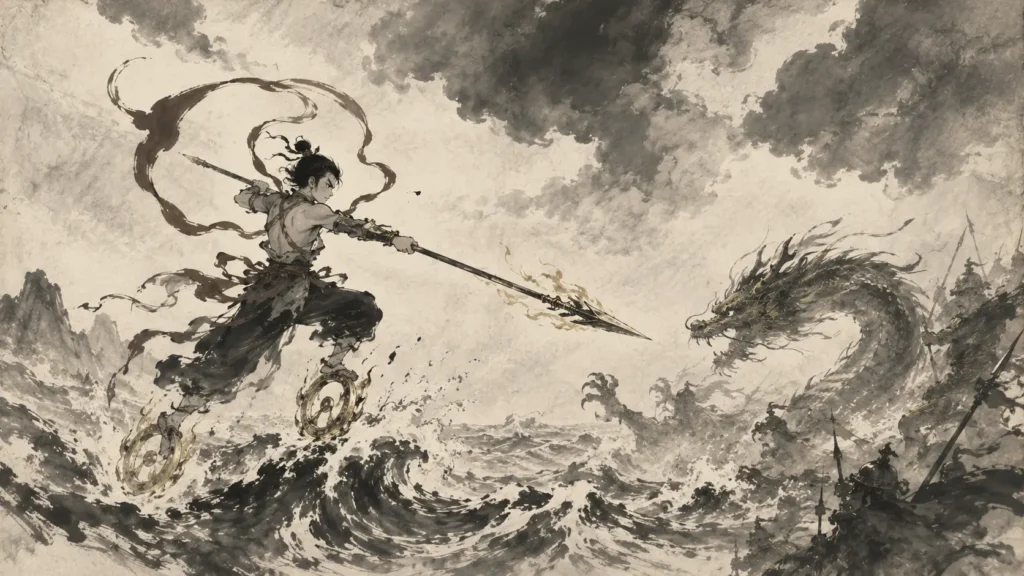
The most famous Nezha story begins when he clashes with the Dragon King of the Eastern Sea.
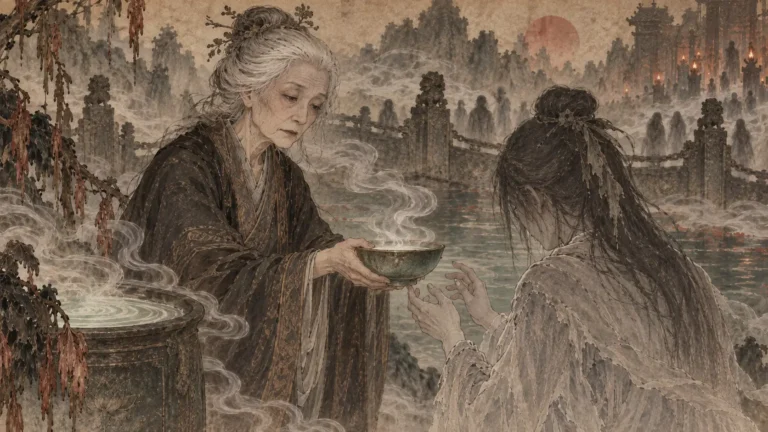
As a child, Nezha accidentally causes chaos near the sea and comes into conflict with the Dragon King’s son. In some versions, Nezha kills the dragon prince after being attacked or provoked. This act creates a dangerous conflict between Nezha’s family and the Dragon King.
The Dragon King demands punishment and threatens Nezha’s parents. To protect his family and take responsibility for his actions, Nezha makes a shocking decision.
He gives up his own life.
In one of the most dramatic scenes in Chinese mythology, Nezha returns his body to his parents, symbolically repaying the life they gave him. This moment is tragic because Nezha is both guilty and heroic. He is wild, emotional, and violent, but he also refuses to let others suffer for his choices.
This is why Nezha’s story is deeper than a simple battle myth. It is about responsibility, shame, family, anger, and sacrifice.
Nezha’s Lotus Body and Rebirth
After Nezha’s death, his soul does not disappear.
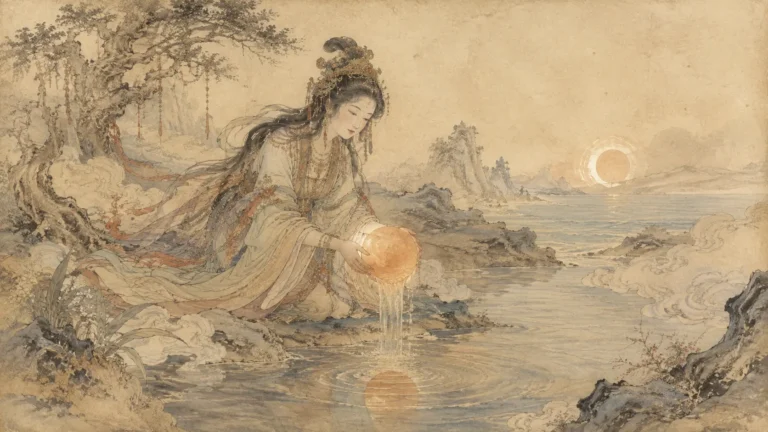
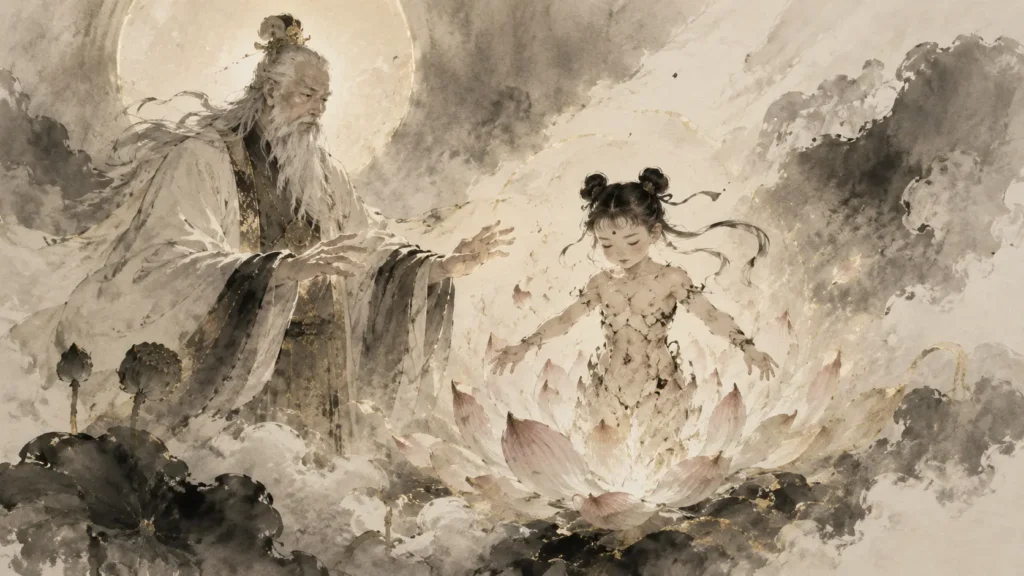
His master Taiyi Zhenren brings him back to life by creating a new body from lotus roots and lotus flowers. This is why Nezha is often called the Third Lotus Prince.
The lotus body gives Nezha a new form, free from ordinary human weakness. He is reborn stronger, faster, and more divine than before.
Symbolically, the lotus represents purity, transformation, and spiritual rebirth. Just like a lotus rises from muddy water without being stained, Nezha rises from tragedy and becomes something greater.
His rebirth is one of the reasons he remains so popular today. Nezha’s story tells us that even after destruction, shame, or failure, a person can return stronger than before.
What Are Nezha’s Powers?
Nezha is one of the most recognizable warrior gods in Chinese mythology because of his unique weapons and abilities.
His most famous weapons include the Fire-tipped Spear, the Universe Ring, the Red Armillary Sash, and the Wind Fire Wheels. These items allow him to fly, fight demons, control magical energy, and move with incredible speed.
In battle, Nezha is often shown as fast, aggressive, and fearless. He does not fight like a calm old immortal. He attacks with explosive energy, overwhelming his enemies through movement, pressure, and courage.
Some depictions also show him with multiple heads and arms, symbolizing his supernatural combat ability.
Nezha’s power is not only physical. His true power comes from his refusal to surrender, even when Heaven, dragons, and fate seem to stand against him.
Nezha in Journey to the West
Nezha also appears in Journey to the West, one of the most famous Chinese novels.
In this story, he serves the Heavenly Court and fights against Sun Wukong during the Monkey King’s rebellion against Heaven. Although Nezha is extremely powerful, even he struggles against the overwhelming strength and trickery of the Monkey King.
This appearance connects Nezha to the larger world of Chinese mythology, where gods, immortals, demons, dragons, and legendary heroes all exist within the same cosmic order.
For readers who discover Chinese mythology through Sun Wukong, Nezha is one of the next most important warrior figures to understand.
Is Nezha Good or Evil?
Nezha is not evil, but he is not simple either.
He is a protector, a warrior, and a divine hero, but his personality is intense and rebellious. He makes mistakes. He loses control. He causes destruction. Yet he also takes responsibility, sacrifices himself, and fights for justice.
This makes him far more interesting than a perfect hero.
Nezha represents the struggle between freedom and duty. He wants to live by his own will, but he also learns that power without responsibility can destroy the people around him.
That is why modern audiences connect with him so strongly. Nezha feels human. He is angry, proud, emotional, and wounded, but he keeps fighting.
Why Nezha Still Matters Today
Nezha remains one of the most beloved figures in Chinese mythology because his story still feels modern.
Many people see him as a symbol of rebellion against unfair expectations. Others see him as a hero who transforms pain into strength. His image appears in temples, novels, cartoons, movies, games, and modern fantasy art.
The animated film Ne Zha introduced him to an even wider global audience, presenting him as a misunderstood child fighting against destiny. This modern version connects strongly with the ancient myth: Nezha is powerful because he refuses to let others define who he is.
In a world where many people feel trapped by family pressure, society, failure, or fear, Nezha’s story feels deeply personal.
Lessons from Nezha
Nezha teaches that strength without control can become destruction.
His early story shows the danger of uncontrolled anger and pride. But his sacrifice and rebirth show that a person is not defined forever by their worst mistake.
For modern men, Nezha represents the fire inside us—the part that wants freedom, respect, and power. But his story also warns us that raw fire must be disciplined.
Anger can destroy you, or it can become fuel.
Pain can break you, or it can become transformation.
Nezha’s journey is not about being calm from the beginning. It is about becoming stronger after chaos, taking responsibility, and returning with a new body, a new purpose, and a sharper will.
Conclusion
Nezha is one of the most powerful and emotionally complex figures in Chinese mythology. He is a warrior god, a rebellious child, a tragic hero, and a symbol of rebirth.
His battle with the Dragon King, his sacrifice for his family, and his return through the lotus body make him more than just another divine fighter. Nezha represents the fight against fate, the pain of growing up, and the possibility of becoming stronger after destruction.
Whether you discover him through ancient Chinese legends, Journey to the West, Fengshen Yanyi, or modern films, Nezha remains one of the most unforgettable gods in Chinese mythology.