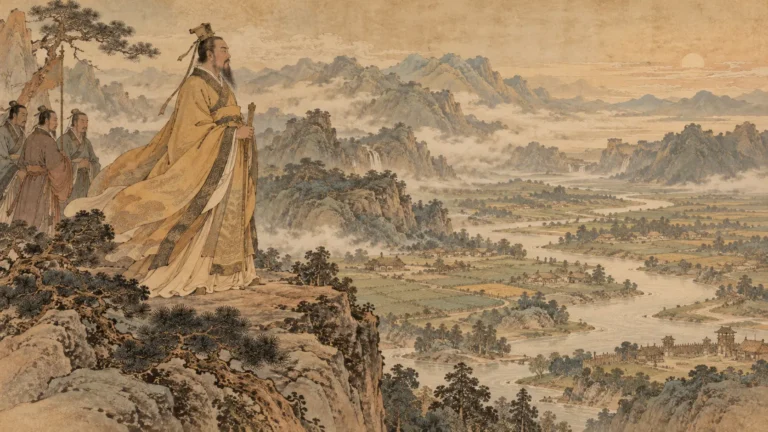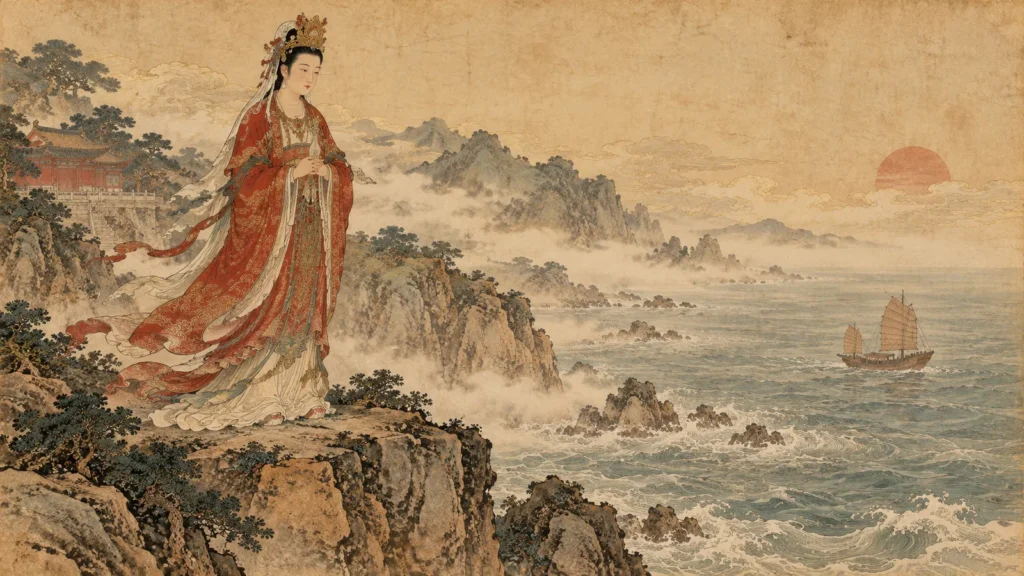
A fishing boat disappears into rough water. On shore, someone waits for a parent, a brother or a child to return. In the stories told along China’s southeastern coast, the figure who answers that fear is often Mazu.
Mazu (妈祖 / 媽祖, Māzǔ) is a Chinese sea goddess revered as a protector of sailors, fishermen and coastal communities. Tradition identifies her with Lin Mo, also called Lin Moniang, a woman associated with tenth-century Meizhou in Fujian. She is also known as Tianhou and, in Cantonese, Tin Hau. Her worship remains a living religious tradition, rather than simply a story from an ancient book.
Mazu at a Glance
| Chinese name | 妈祖 / 媽祖 |
|---|---|
| Pinyin | Māzǔ |
| Other names and titles | Matsu, Tianhou, Tin Hau, Tianshang Shengmu |
| Traditional human identity | Lin Mo / Lin Moniang |
| Place of origin | Meizhou, Fujian |
| Best-known role | Protection at sea |
| Tradition | Chinese folk religion and temple worship |
Who Was Lin Moniang?
The Bureau of Cultural Heritage’s account of Mazu worship begins with a woman named Lin Mo, traditionally placed in the Song period on Meizhou Island. It also notes early accounts of her ritual abilities. Later devotion remembers her as a compassionate figure who intervened in dangerous voyages.
Lin Moniang is the familiar personal name in many retellings. But a traditional biography is not the same thing as a contemporary record of every event. Details about her childhood, supernatural abilities and death vary between accounts.
That distinction helps explain Mazu’s development: a local woman’s remembered identity became the foundation for a much wider religious presence. The resulting tradition combines biography, miracle stories, official recognition and generations of community worship.
Why Is Mazu a Goddess of the Sea?
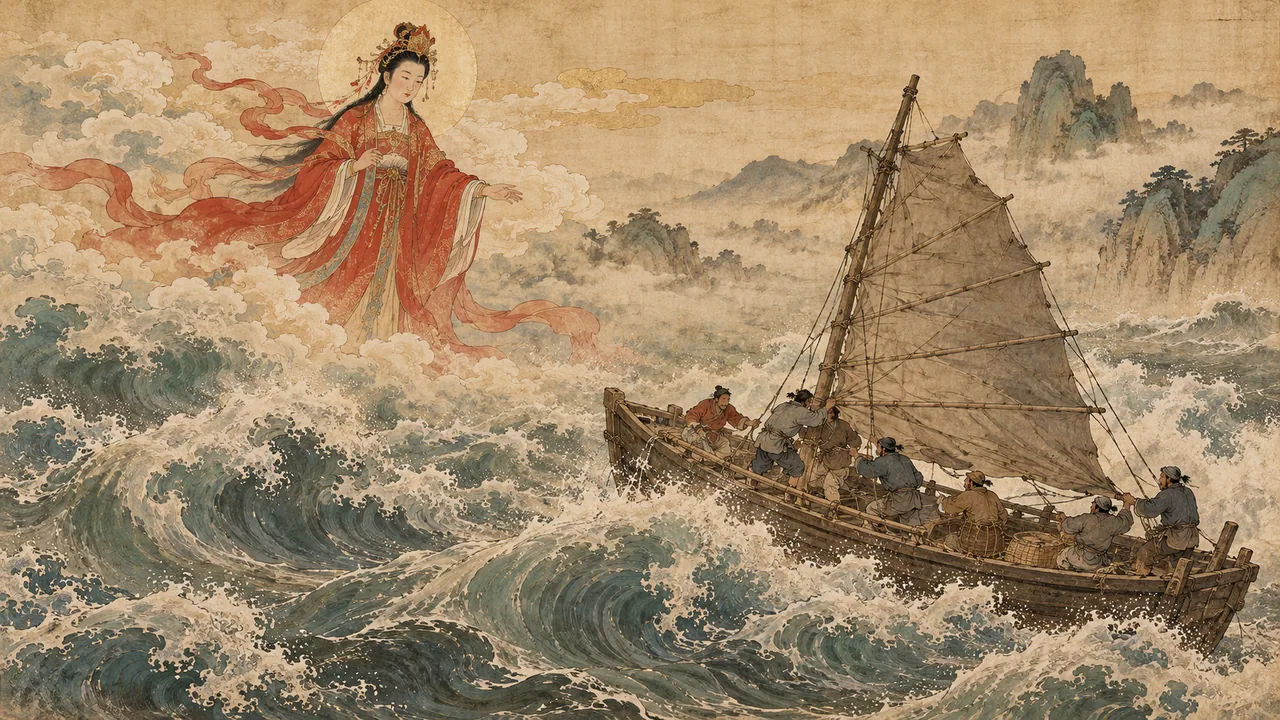
The connection is rescue. Stories repeatedly place Mazu beside people threatened by shipwrecks, storms and dangerous crossings. UNESCO’s inscription decision records a tradition in which she died while attempting to save people from a wreck and was subsequently honored with a temple.
Other versions emphasize different rescues. The Taiwan Historica collection account includes the familiar tradition of saving her father and brothers from disaster at sea. These accounts should be read as related devotional narratives, not combined into one supposedly eyewitness biography.
For people whose livelihoods depended on returning safely to shore, a protective presence at sea had immediate meaning. Mazu’s importance grew around that relationship between danger, hope and gratitude.
Mazu and Tin Hau Are the Same Goddess
Mazu appears under several names and honorific titles. Tianhou (天后, Tiānhòu) means Heavenly Empress or Queen of Heaven. Tin Hau is the Cantonese reading of that title. Tianshang Shengmu (天上聖母) is another devotional title, commonly rendered Heavenly Holy Mother.
The Hong Kong Tourism Commission’s Tin Hau introduction explicitly identifies Tin Hau with Mazu and A-Ma. Different temple names therefore do not automatically indicate different sea goddesses.
Unlike Longwang, the Dragon King tradition, Mazu is usually approached through the identity of a compassionate female protector. Their shared connection with the sea does not make them interchangeable.
From Local Devotion to a Wider Tradition
Mazu’s worship did not remain confined to her place of origin. Migration and maritime travel carried devotion into new communities. The Bureau of Cultural Heritage describes travelers bringing incense ash or a deity image across the sea and establishing worship after arrival.
In Taiwan, local temple identities developed around the same goddess. The tradition adapted to community concerns beyond fishing, including agriculture, settlement and everyday protection. This is one reason a single neat list of “Mazu’s powers” can miss how her worship actually works.
She belongs within the wider world of Chinese gods and immortals, but her identity is especially closely tied to the communities who carry her image, maintain her temples and tell her rescue stories.
What Do Mazu Temples and Festivals Show?
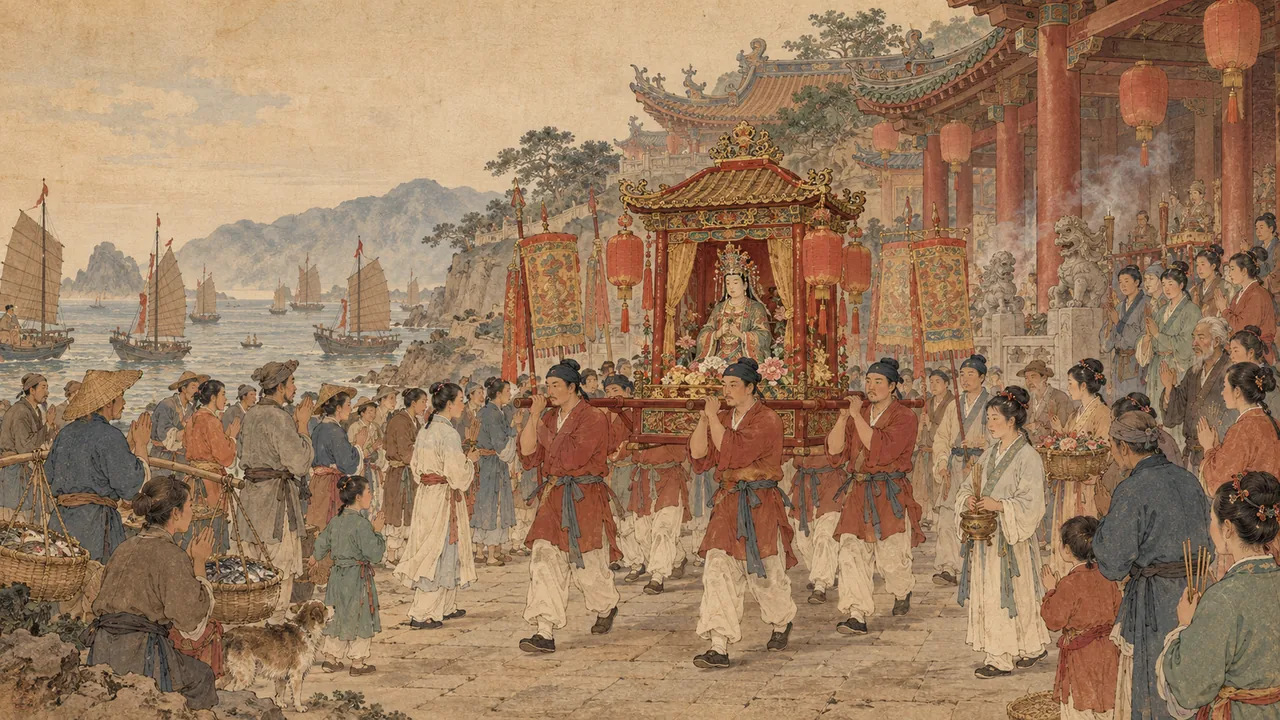
Temple images can present Mazu with the dignity of an imperial figure. Taiwan Historica records titles including Lady, Heavenly Consort and Heavenly Empress, and preserves statues of Mazu alongside Qianliyan and Shunfeng’er, her familiar attendants.
Festivals and processions bring that temple presence into public space. Incense, offerings, music and the movement of a deity image make worship a shared event. Practices vary by location; there is no single ceremony that every Mazu community performs identically.
In 2009, UNESCO inscribed Mazu belief and customs on its Representative List of the Intangible Cultural Heritage of Humanity. The recognition concerns the living beliefs and practices surrounding her. It is not evidence that the miracles themselves occurred.
Why Mazu Still Matters
Many figures in Chinese mythology are encountered mainly through literature or art. Mazu is also encountered through living temples, family devotion and journeys made in her honor.
Her story holds together two scales: the vast uncertainty of the sea, and the deeply personal hope that someone will come home. That connection helps explain why a goddess rooted in one coastal community could become meaningful far beyond it.
References and Sources
UNESCO — Decision 4.COM 13.18: 2009 inscription and description of Mazu belief and customs.
Bureau of Cultural Heritage — Mazu Worship: origins, migration and local development of the tradition.
Taiwan Historica — Mazu, Qianliyan and Shunfeng’er statues: devotional names, rescue traditions and temple figures.
Hong Kong Tourism Commission — Who Is Tin Hau?: identification of Tin Hau, Mazu and A-Ma.