When people think about Chinese mythology, they often imagine the Monkey King, mighty dragons, or legendary immortals. Yet above them all sits one divine ruler whose authority shapes the entire celestial world—the Jade Emperor.
Known in Chinese as Yu Huang (玉皇), the Jade Emperor is the supreme ruler of Heaven, the leader of the Celestial Court, and one of the most respected deities in Chinese mythology, Daoism, and traditional folk religion. While many Western audiences first encounter him during Sun Wukong’s rebellion in Journey to the West, his importance stretches far beyond that famous story.
The Jade Emperor represents wisdom, justice, order, and responsibility. Rather than ruling through fear or overwhelming strength, he governs the universe through balance, law, and centuries of accumulated wisdom.
Who Is the Jade Emperor?
The Jade Emperor is the highest-ranking ruler of Heaven in Chinese mythology. He presides over the Heavenly Court, where countless gods, immortals, celestial generals, spirits, and divine officials carry out their duties.
Unlike many mythological kings who constantly fight monsters or wage wars, the Jade Emperor functions more like an emperor of a vast celestial empire. Every god has responsibilities, every spirit has a role, and every supernatural event ultimately falls under his authority.
His influence extends across Heaven, Earth, and the spirit world. From controlling natural order to overseeing the actions of gods and humans, he is considered the guardian of harmony throughout the universe.
Because of this, many Daoists and followers of Chinese folk religion worship the Jade Emperor as the highest heavenly authority.
The Origin of the Jade Emperor
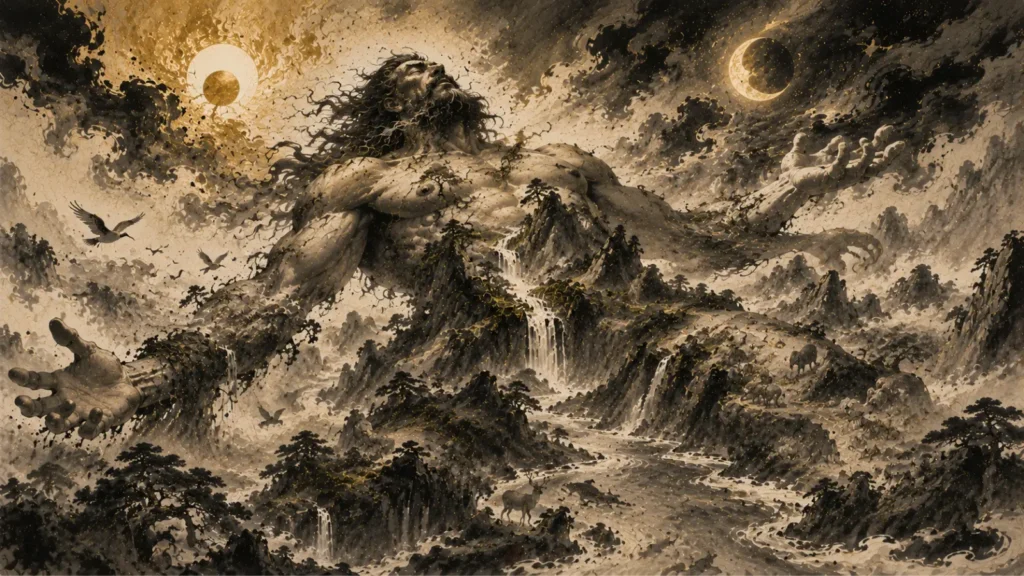
The origins of the Jade Emperor vary across different Chinese traditions, but one story appears more often than the others.
According to Daoist legend, he was once a compassionate prince who devoted countless lifetimes to cultivating virtue, wisdom, and selflessness. Instead of seeking power, he dedicated himself to helping all living beings.
After millions of years of spiritual cultivation and countless good deeds, he achieved enlightenment and ascended to Heaven. His extraordinary wisdom eventually earned him the position of supreme ruler of the Heavenly Court.
Other traditions simply describe him as an eternal celestial ruler who has governed Heaven since ancient times. These different versions reflect the long history of Chinese mythology, where legends evolved over thousands of years while blending Daoist philosophy, folklore, and local beliefs.
Regardless of which origin story is told, every version agrees on one point: the Jade Emperor earned his authority through perfect virtue rather than brute force.
What Does the Jade Emperor Control?
As the ruler of Heaven, the Jade Emperor governs nearly every aspect of the cosmic order.
His responsibilities include:
- Leading the Heavenly Court.
- Appointing and supervising gods and immortals.
- Maintaining balance between Heaven and Earth.
- Rewarding virtue and punishing wrongdoing.
- Overseeing the natural world.
- Protecting harmony throughout the universe.
Rather than handling every task personally, he delegates responsibilities to countless celestial officials. Dragon Kings oversee seas and rainfall, City Gods protect towns, the Kitchen God reports on households, and heavenly generals defend the celestial realm.
This organized structure reflects the influence of imperial China, where government officials served under the emperor to maintain order across the empire.
The Heavenly Court Explained
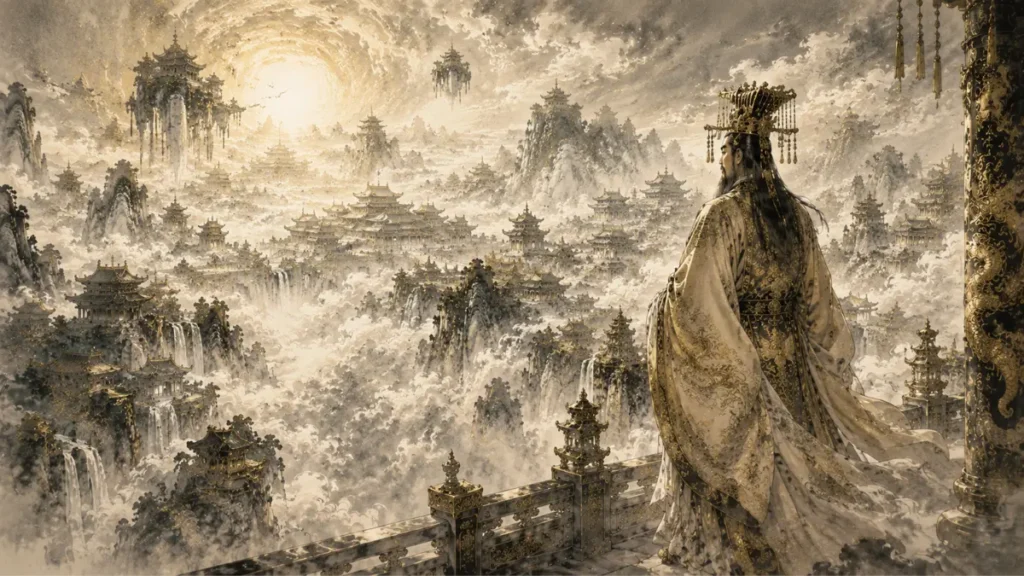
The Heavenly Court functions like a magnificent celestial government.
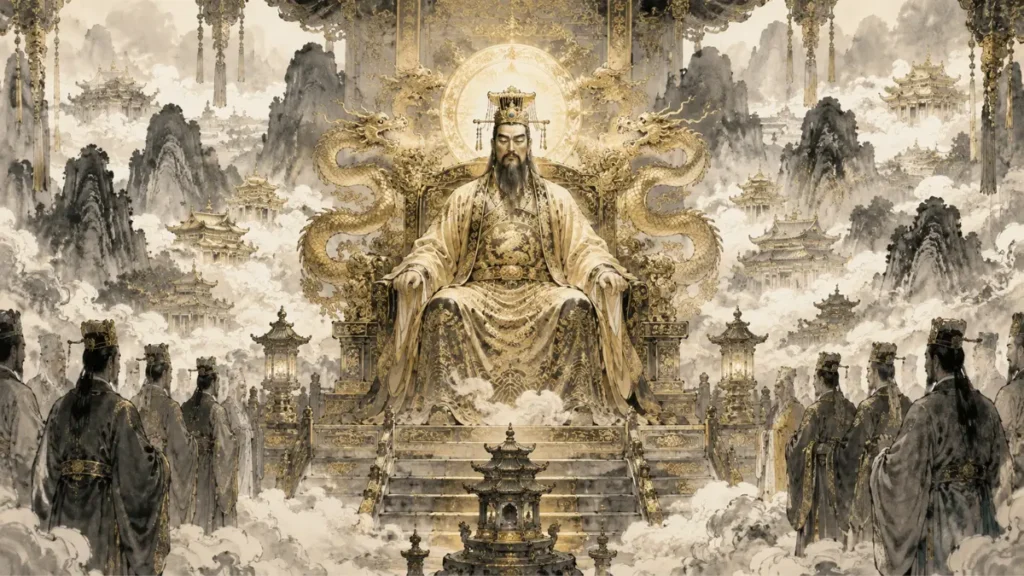
At its center sits the Jade Emperor upon his heavenly throne, surrounded by ministers, generals, judges, scholars, immortals, and divine servants. Every deity has specific duties that contribute to the smooth operation of the universe.
Among the most important members are the Four Heavenly Kings, who guard the four directions of the world, the Dragon Kings who command rivers and oceans, and numerous Daoist immortals who carry out heavenly missions.
Unlike many mythologies where gods frequently battle for power, the Chinese Heavenly Court emphasizes hierarchy, responsibility, and cooperation. Every official answers to the Jade Emperor, ensuring that Heaven operates according to divine law.
The Jade Emperor and Sun Wukong
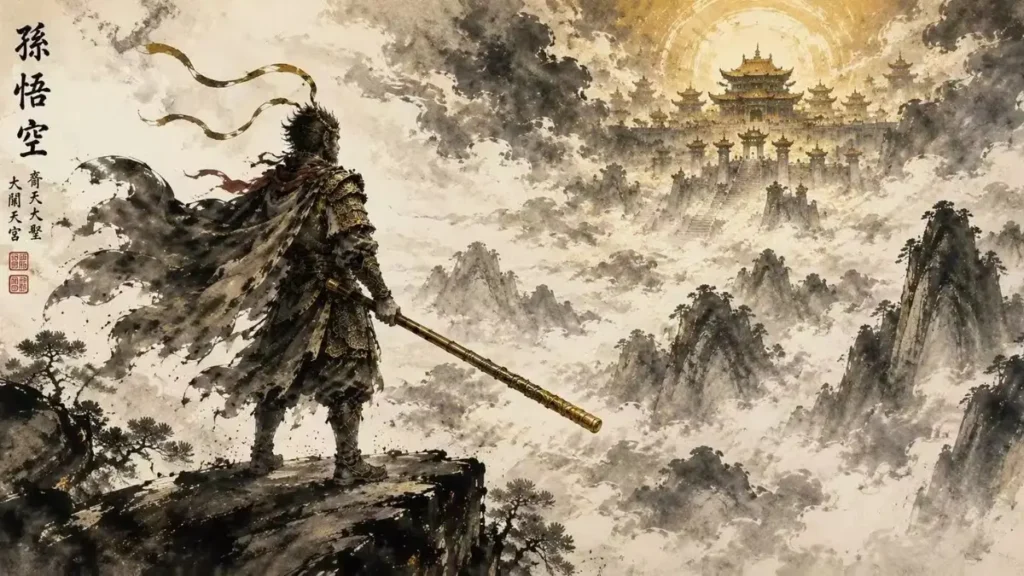
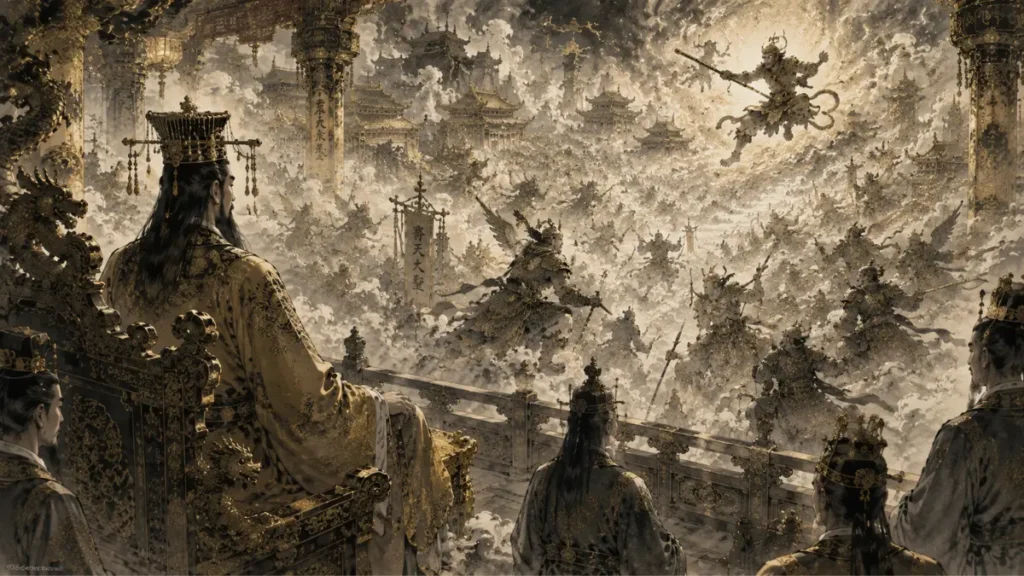
One of the most famous moments involving the Jade Emperor occurs during Journey to the West, when Sun Wukong, the Monkey King, rebels against Heaven.
After obtaining incredible powers and immortality, Sun Wukong declares himself equal to Heaven itself. He defeats many heavenly warriors, causes chaos throughout the Celestial Court, and humiliates numerous gods.
Despite the destruction, the Jade Emperor remains calm. Rather than allowing pride to dictate his actions, he recognizes that the situation requires a greater solution.
Instead of fighting personally, he requests the assistance of the Buddha. The Buddha ultimately defeats Sun Wukong by trapping him beneath the Five Elements Mountain for five hundred years.
Many readers mistakenly believe this makes the Jade Emperor weak. In reality, his role is not that of a frontline warrior but of a supreme ruler responsible for preserving order. Like a wise emperor, he relies on capable allies rather than unnecessary personal combat.
What Powers Does the Jade Emperor Have?
Although the Jade Emperor rarely fights directly, his powers are immense.
He possesses divine authority over Heaven itself, commands celestial armies, appoints gods to their positions, and governs the laws that maintain balance throughout the universe.
His greatest strength is not physical power but absolute authority. Every heavenly official recognizes his commands, and even powerful immortals respect his position.
His wisdom, patience, and leadership make him one of the most influential figures in all of Chinese mythology.
Is the Jade Emperor Stronger Than Sun Wukong?
This is one of the most common questions asked by fans of Chinese mythology.
The answer depends on how strength is defined.
In raw combat ability, Sun Wukong is among the greatest warriors ever described in Chinese legends. His seventy-two transformations, magical staff, immortality, and supernatural speed allow him to defeat countless opponents.
However, the Jade Emperor holds a far higher position. He rules the entire Heavenly Court and commands the gods themselves. More importantly, he possesses the wisdom to solve problems through leadership instead of brute force.
The Monkey King may win battles, but the Jade Emperor preserves the order of the universe.
Why the Jade Emperor Still Matters Today
The Jade Emperor remains one of the most important figures in Chinese culture.
Temples dedicated to him can be found throughout China, Taiwan, Malaysia, Singapore, and many overseas Chinese communities. His birthday is celebrated with ceremonies, prayers, and offerings that have continued for centuries.
Modern audiences also encounter him in films, television series, novels, and games such as Black Myth: Wukong, which has introduced millions of players to Chinese mythology.
As global interest in Chinese legends continues to grow, the Jade Emperor stands as one of the essential figures for understanding the rich mythology behind these stories.
Lessons from the Jade Emperor
The Jade Emperor teaches that true leadership is built on wisdom rather than domination.
He demonstrates that responsibility often requires patience, that lasting authority comes from fairness instead of fear, and that great leaders solve problems without allowing emotion to control their decisions.
His story reminds us that real strength is not measured only by how many battles we win but by how well we guide others, maintain order, and protect what truly matters.
Conclusion
The Jade Emperor is far more than a king of the gods. He represents the highest ideals of leadership, justice, wisdom, and cosmic balance within Chinese mythology.
Whether you first discovered him through Journey to the West, Black Myth: Wukong, or traditional Chinese legends, understanding the Jade Emperor provides a deeper appreciation of the entire Chinese pantheon. His influence reaches every corner of Heaven, making him one of the most important and enduring figures in Chinese mythology.